
 Share to X
I’ve always been a fan of the Hudson River School artists. They produced many stunning and remarkably intricate paintings. I don’t have the patience to paint like those artists, but I can certainly stand back and appreciate their work. Let’s take a look at some of my favorites.
(The Hudson River School refers to a group of 19th-century American artists known for their dramatic depictions of nature, usually on large canvases. Their work was a mix of romanticism and realism and often featured the Hudson River Valley, the Catskills, and the American wilderness in general. It wasn’t a formal movement or school. Critics and historians coined the phrase to describe the group of like-minded artists.)
Albert Bierstadt, In the Sierras
Let’s start with Bierstadt’s In the Sierras. One of the key characteristics of the Hudson River School paintings is a romantic, almost surreal portrayal of the landscape. This painting showcases that well. Everything lines up nicely: deer along the shoreline, ducks taking flight, soft rays of light illuminating a distant waterfall, the glow on the water’s surface, and the grand mountains and trees. It makes for quite a statement, even though nature rarely comes together this perfectly.

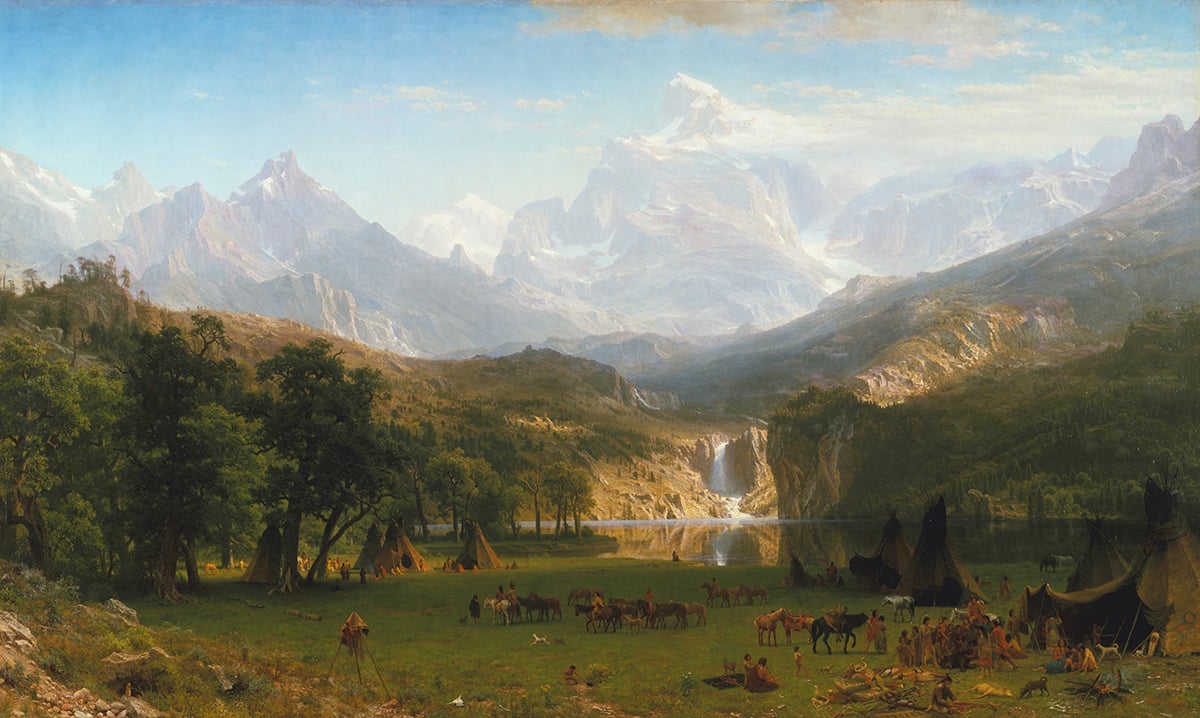
Albert Bierstadt, The Rocky Mountains, Lander’s Peak
I love the play between the rich and dark foreground and the light and delicate background. Again, Bierstadt illuminated the waterfall in the distance and other parts of the land. This makes for a powerful focal point. Bierstadt painted everything with fine detail, but there’s no mistaking where he wanted us to look.
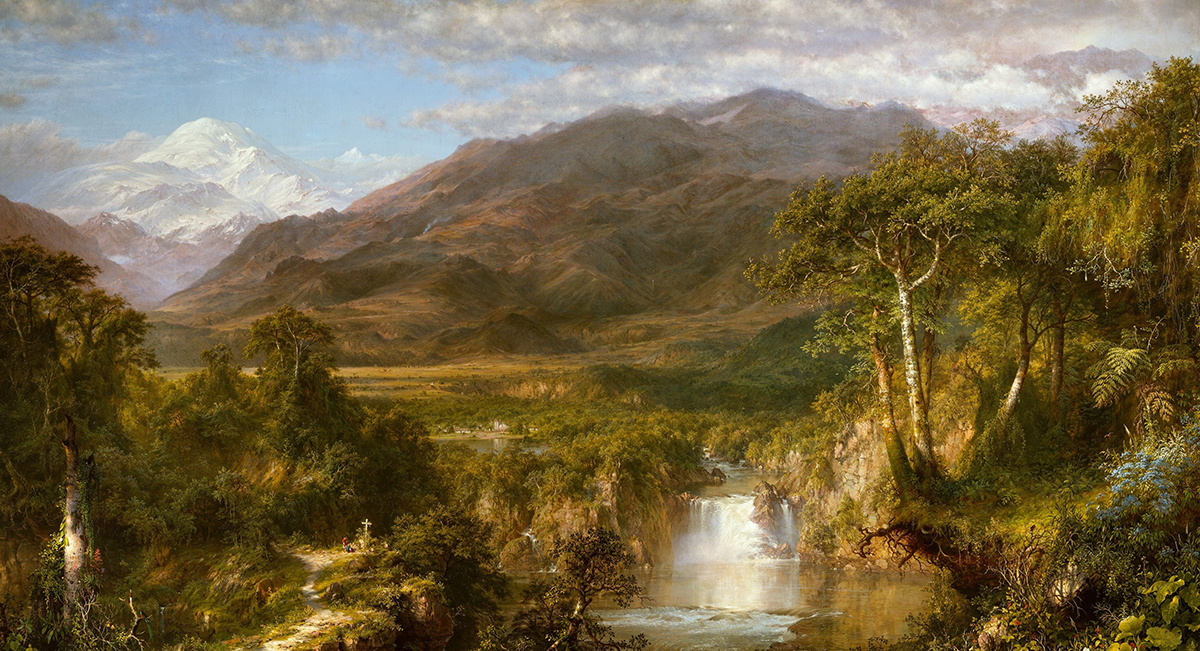
Frederic Edwin Church, Heart of the Andes
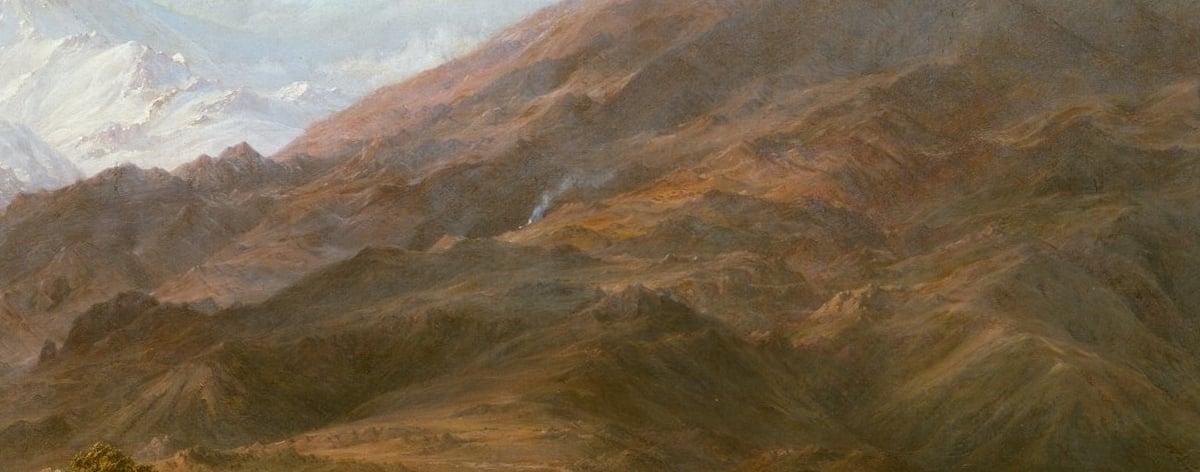
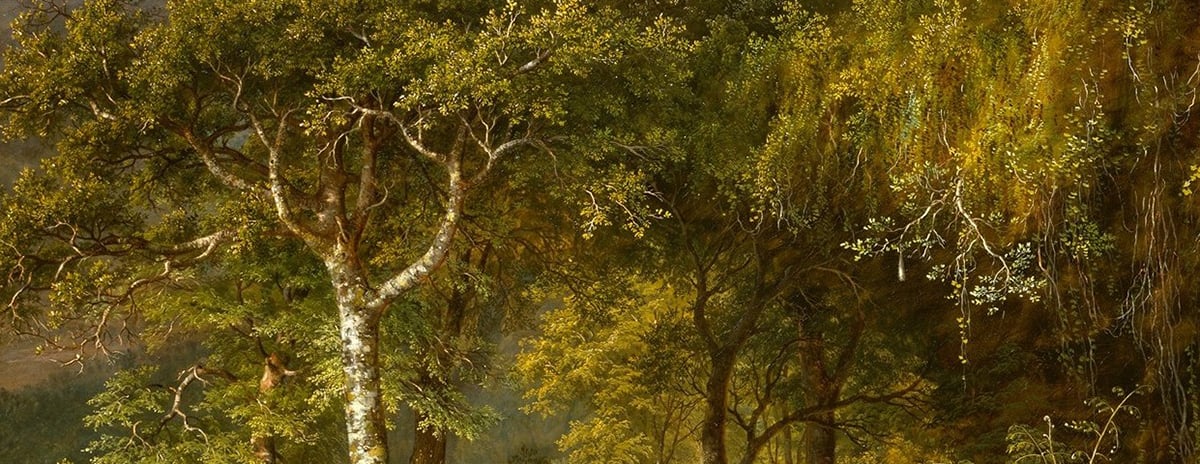
This one must be a remarkable sight in person. Like many Hudson River School paintings, it’s grand in scale, measuring around 66 by 120 inches. Every one of those inches is finely rendered and packed with detail. I shudder to think how long this must have taken to complete!
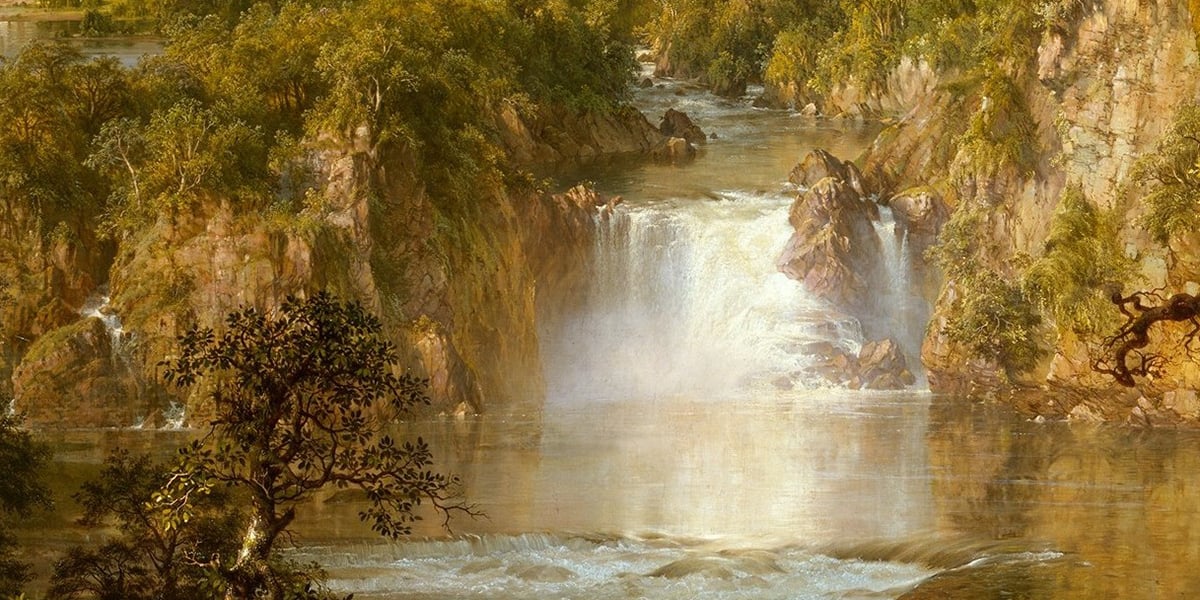
Here are a few close-ups of the detail and brushwork:
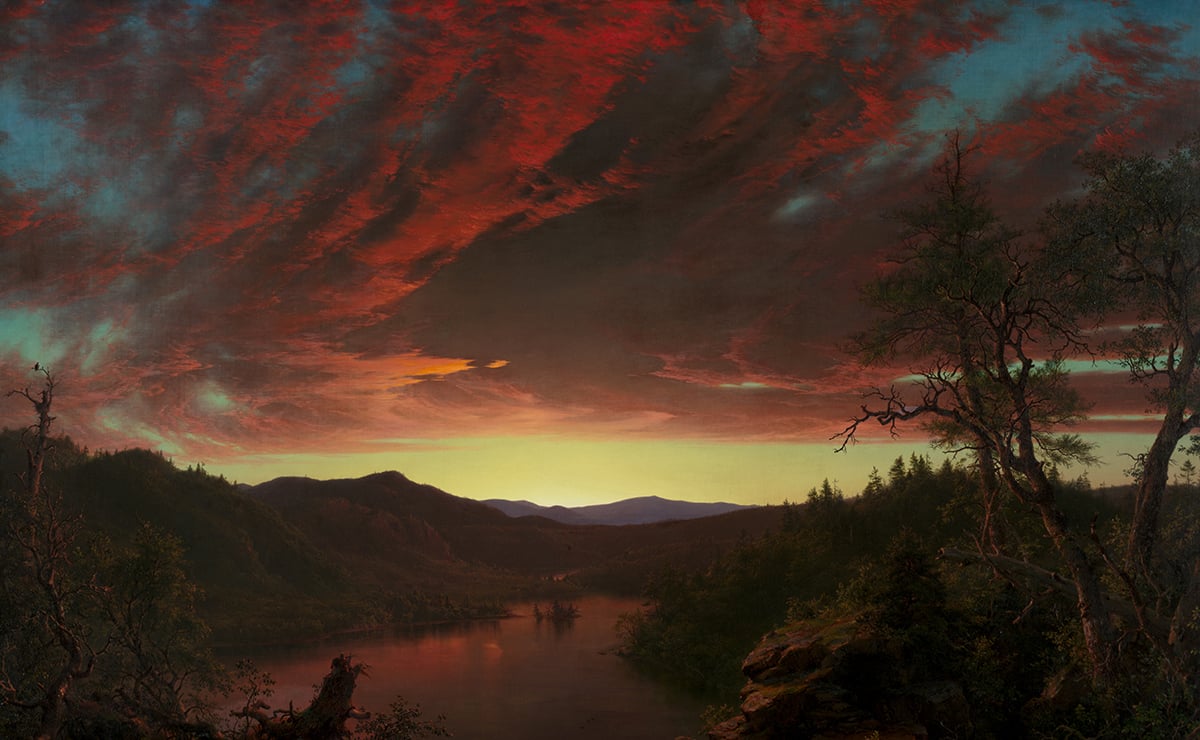
Frederic Edwin Church, Twilight in the Wilderness
A stunning twilight painting. Those yellows, oranges, and reds really sing against the dark surroundings. Remember, color is all about contrast. If you want certain colors to stand out, surround them with opposing colors. Also notice the subtle gradation in the open sky. It goes from bright yellow just above the horizon line to green to blue around the top. Each color seamlessly melts into the next. The clouds, on the other hand, are much grittier and erratic.
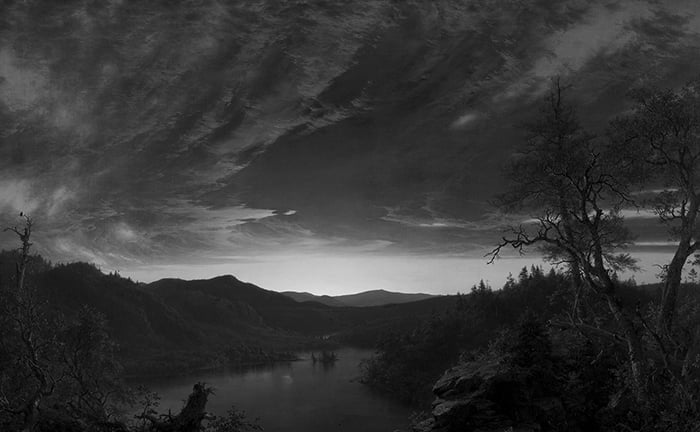
In the grayscale below, you can see the strong role of value contrast. Light lights against dark darks, with not much in between. I also find it interesting how the blue parts of the open sky are much darker than I expected. It seems temperature contrast is doing a lot of work in those top areas.
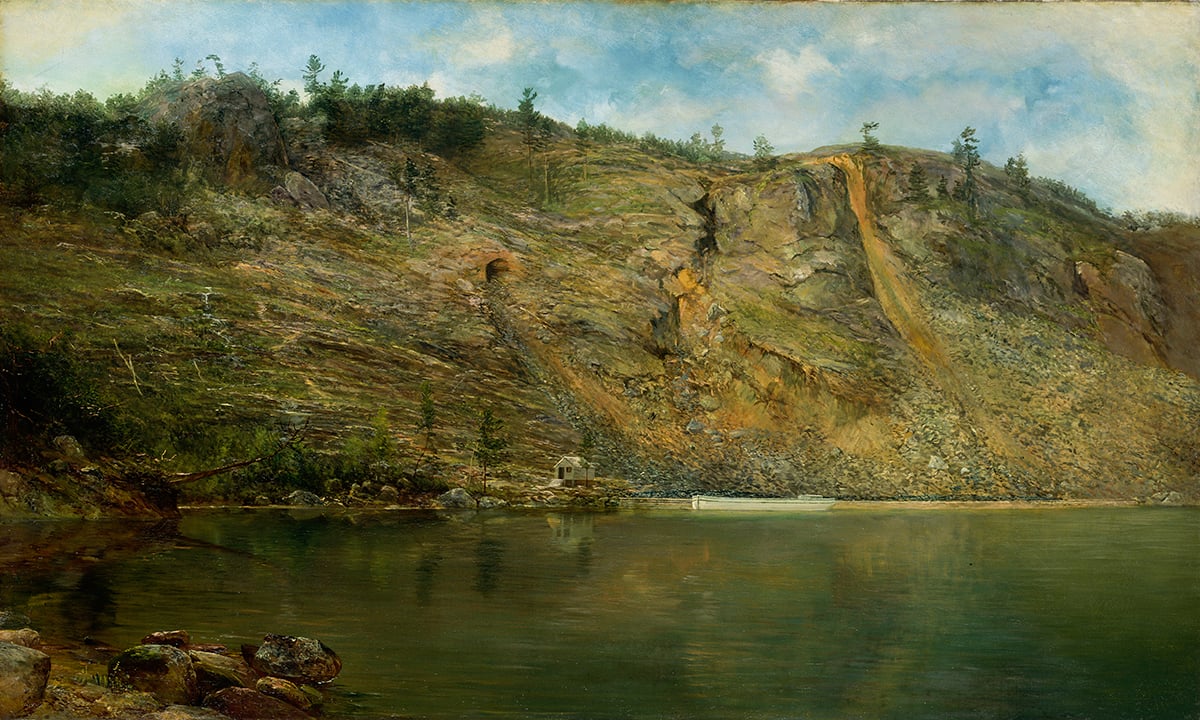
Homer Dodge Martin, The Iron Mine, Port Henry, New York
This is an interesting painting. The land is full of intricate detail and has a gritty and rustic finish. The water is calm and vaguely reflects the colors of the land. The sky appears soft and fluttery, as if it were painted with watercolors. I didn’t notice straight away, but there’s a tiny cabin and a long boat in the distance. The cabin puts into perspective the sheer size of the land behind. The boat also appears unusually long, but I guess it makes sense if it was for transporting materials from the mine shaft, which you can see above the cabin.
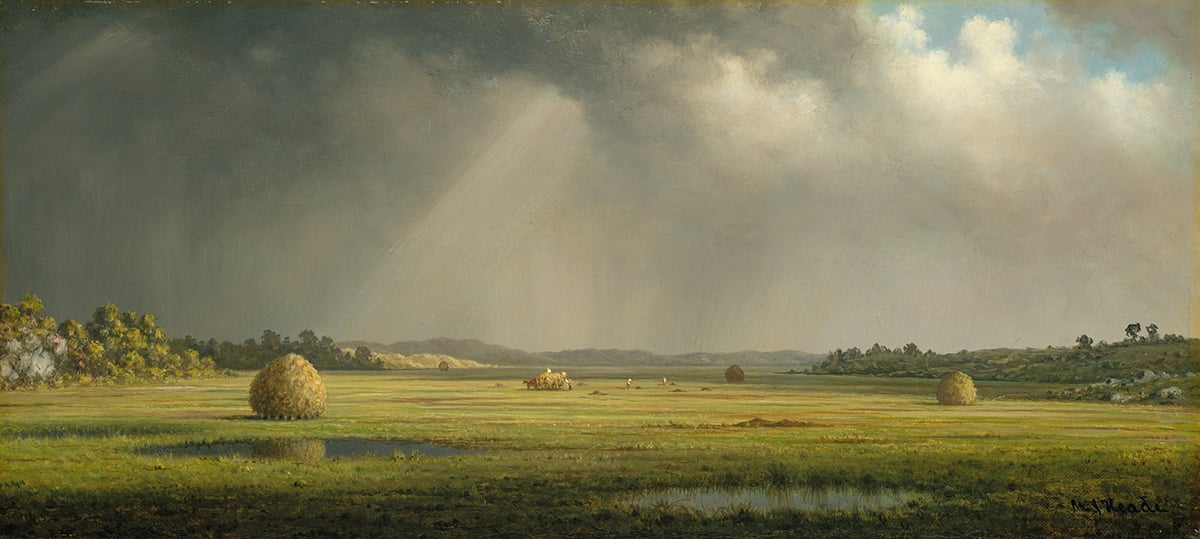
Martin Johnson Heade, Newburyport Meadows
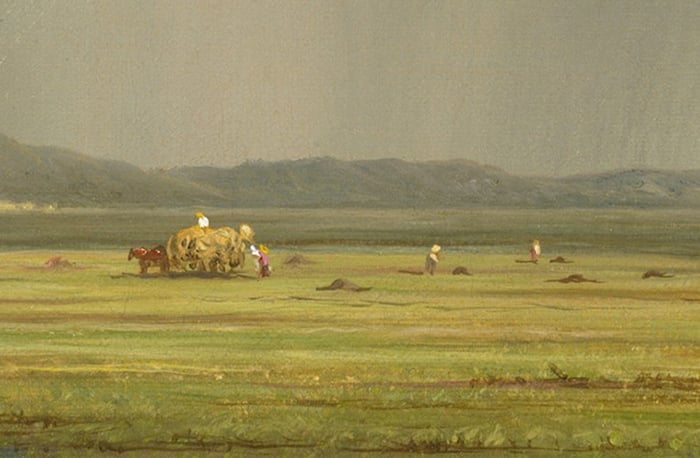
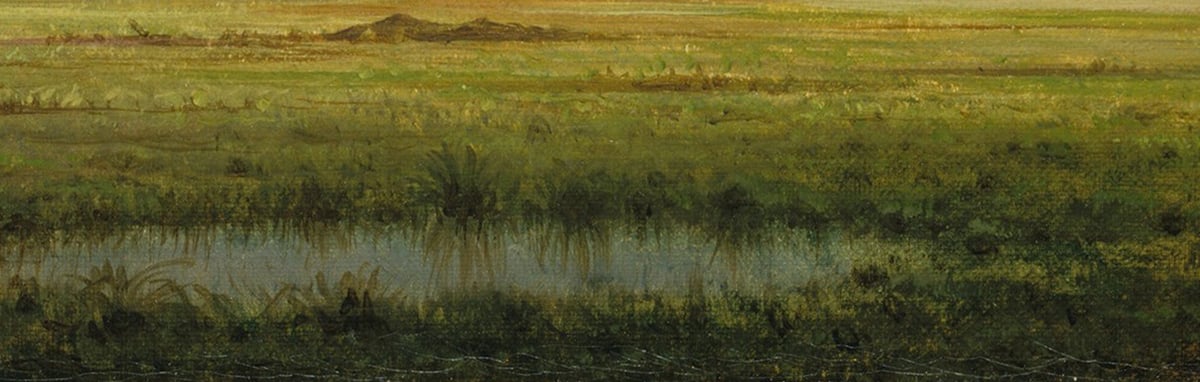
A relatively understated and quiet landscape compared to many of the other paintings featured in this post. It depicts a wide view of a marsh in Newburyport, Massachusetts. It’s overcast, with some rays of light shining through the clouds and illuminating parts of the landscape. If you look closely, you can see farmers and animals around the middle—yet another example of using relative scale to showcase the vast surroundings. This is also a good demonstration of how to paint grass in a realistic style without it appearing too tight and overdone.
Sanford Robinson Gifford, The Artist Sketching at Mount Desert, Maine
Gifford was a second-generation artist of the Hudson River School. I love this painting. It sums up the artist life well. Solitary and wholesome. It also reminds me of one of my favorite artists, Sir Arthur Streeton, with the dry, high-key colors.

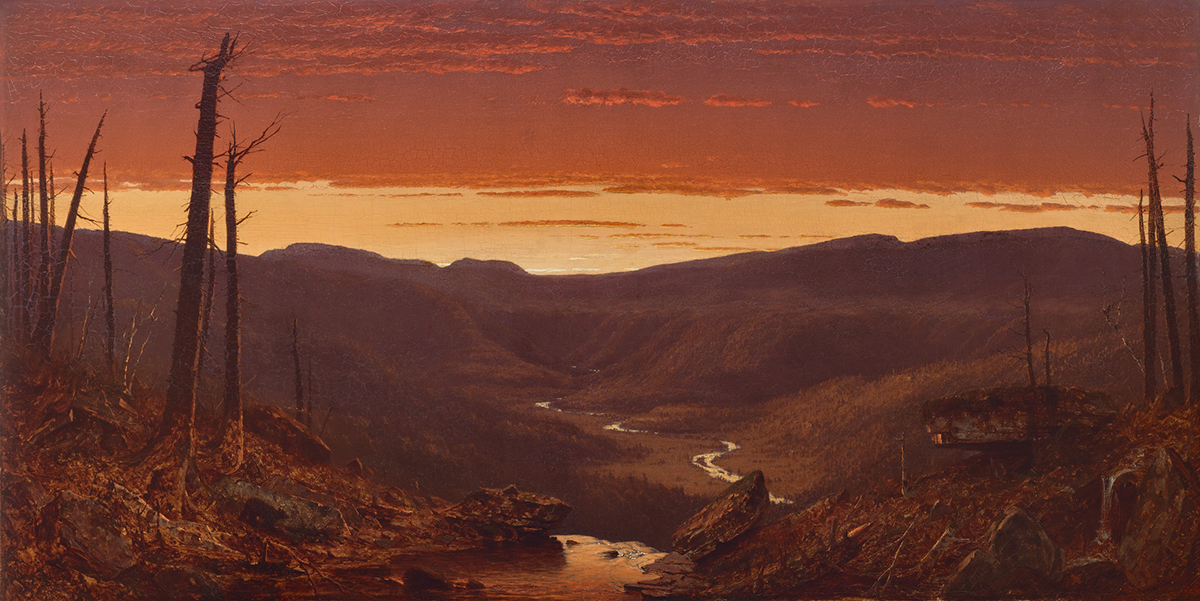
Sanford Robinson Gifford, Twilight in the Catskills
Another by Gifford, this time a vivid sunset. Notice all the detail in the foreground. If I were painting this, I would probably simplify the foreground, but it’s interesting seeing a different approach.
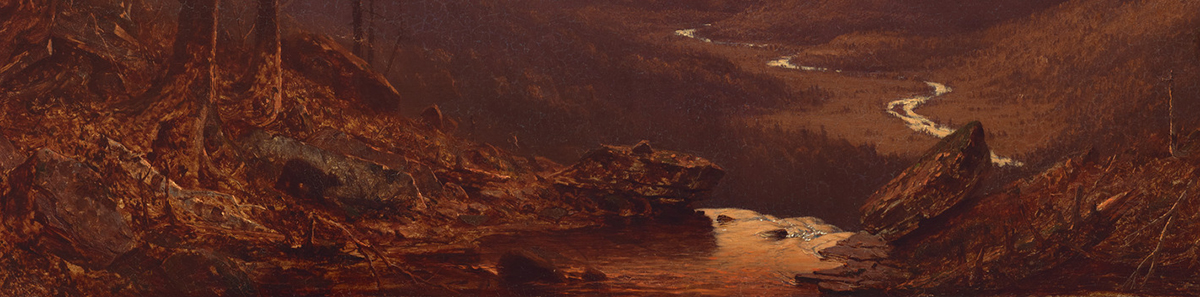
Thomas Moran, Green River Cliffs, Wyoming, South Utah
What a complex painting. The mountains have an almost ethereal quality as they glow in the sunlight. And notice all the different colors Moran used for the sky. Purples, blues, greens, oranges, and yellows (the open sky isn’t always just blue).
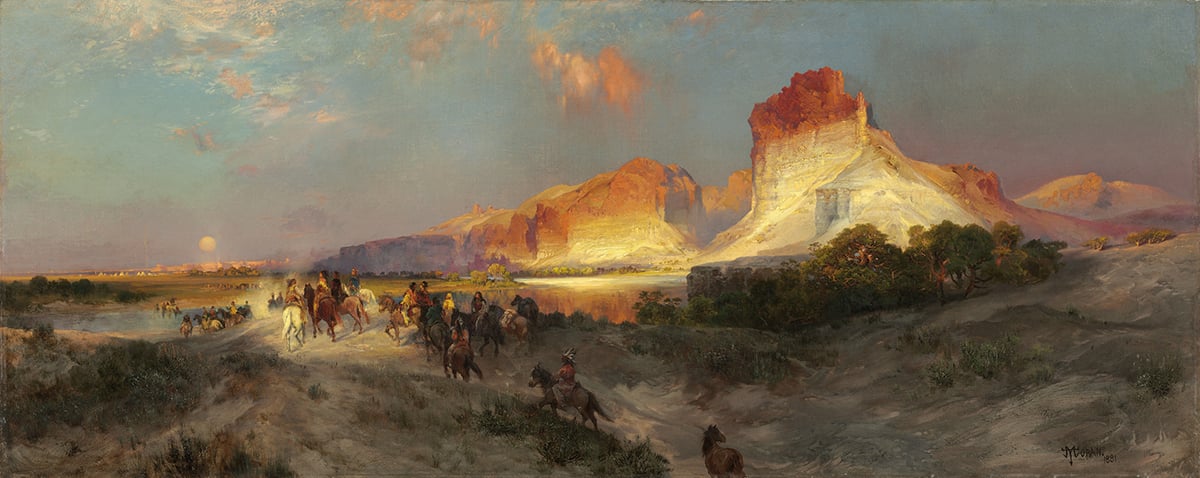
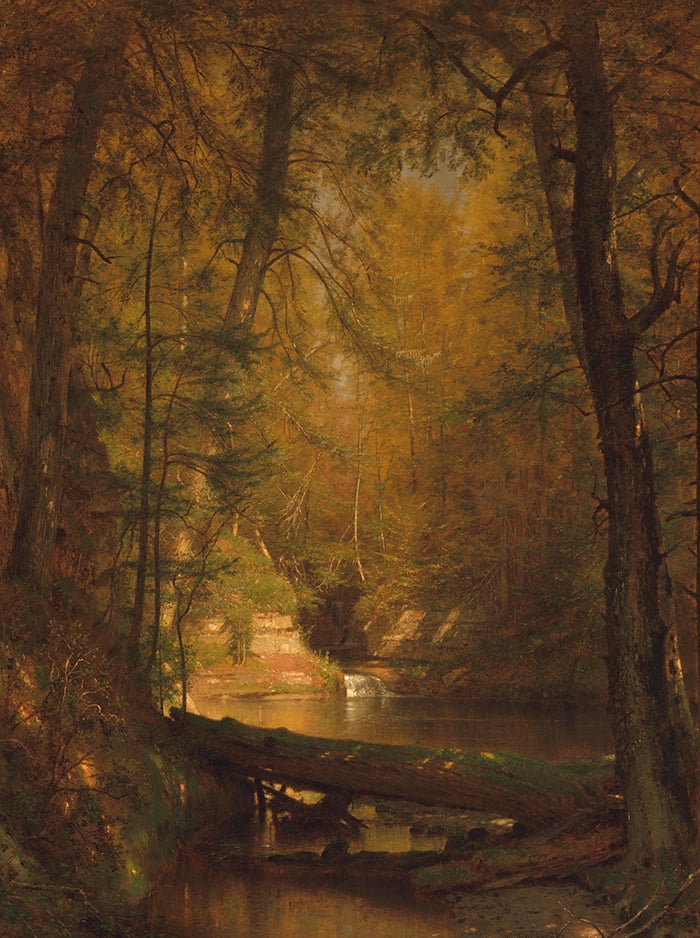
Worthington Whittredge, The Trout Pool, Lander’s Peak
I love the idea of a secluded trout pool amongst the forest. Makes me want to pick up my fishing rod! It has a beautiful sense of warmth to it, with the light areas bathed in sunlight. The fallen tree across the water creates all kinds of interesting patterns of light and dark.
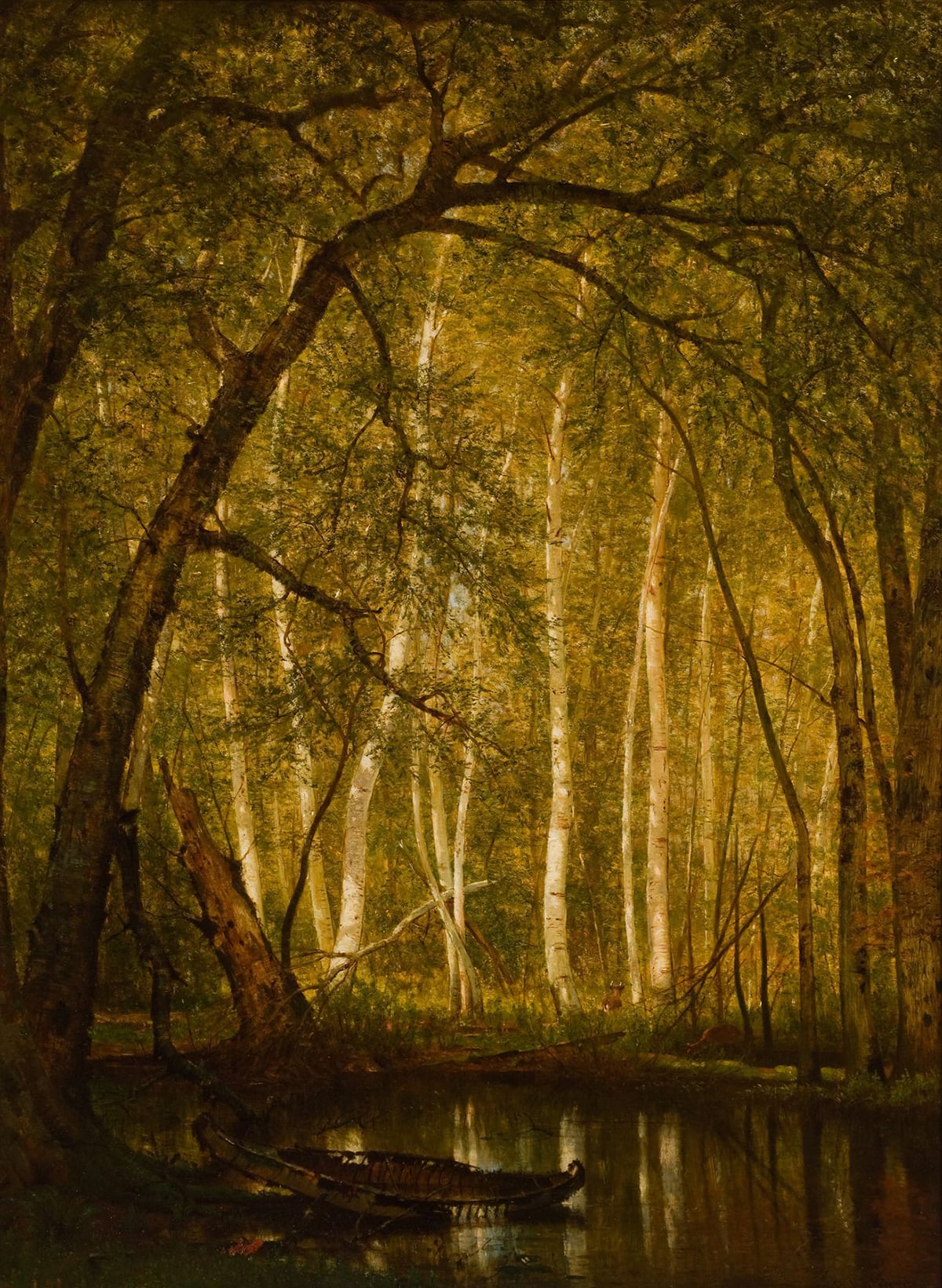
Worthington Whittredge, The Old Hunting Grounds
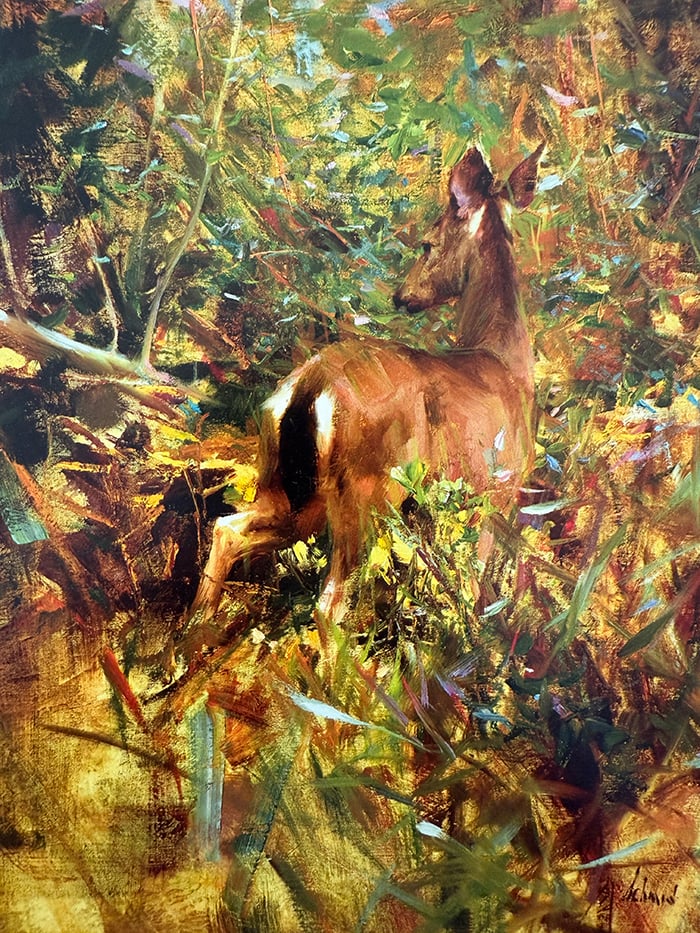
Another painting by Whittredge of a similar subject. Notice the two deer behind the pond. It reminds me of Richard Schmid’s painting, Mule Deer (shown below Whittredge’s painting). Hidden gems like this are always interesting if you can find a way to include them. They add an element of, the more you look at the painting, the more you notice. The trick is being able to make them appear realistic whilst also weaving them in with the surroundings. Nature does this well by default. Next time you’re at your local park, notice the way the birds and lizards and other animals camouflage amongst the surroundings.
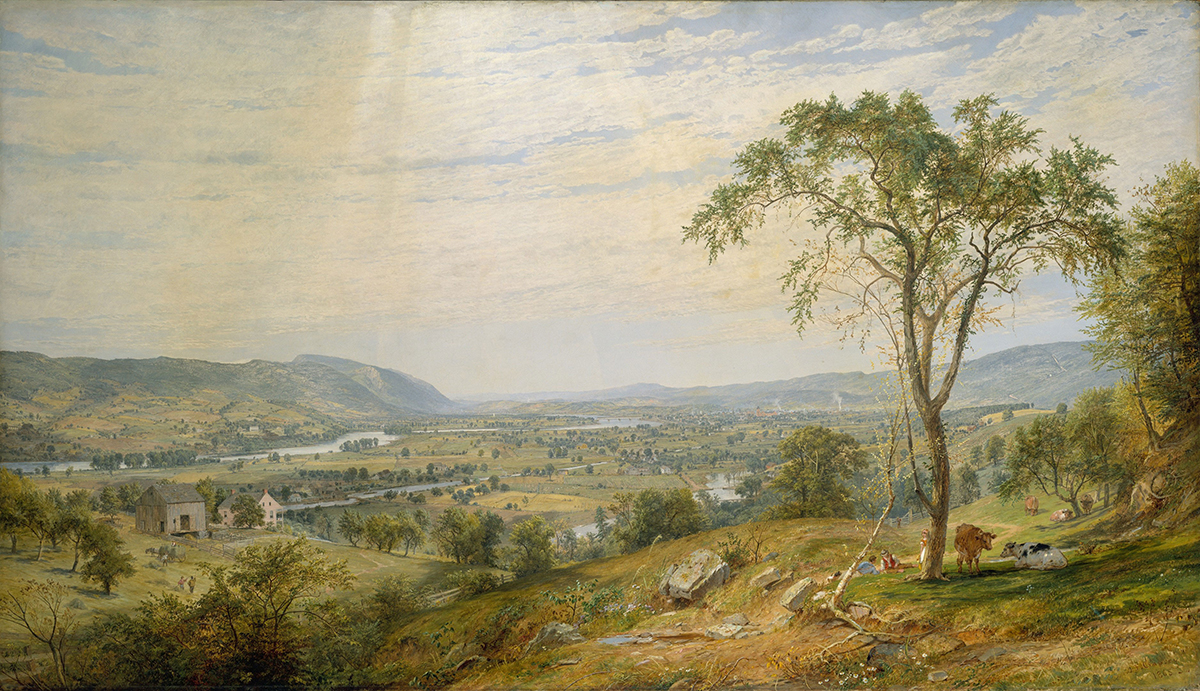
Jasper Francis Cropsey, The Valley of Wyoming
A pleasant landscape, with a few people and cows lounging under a tree. It features a classic “L” composition, formed by the main tree and the land. Rays of light shoot down from the sun above. These visible rays of light are certainly a common theme of Hudson River School paintings.
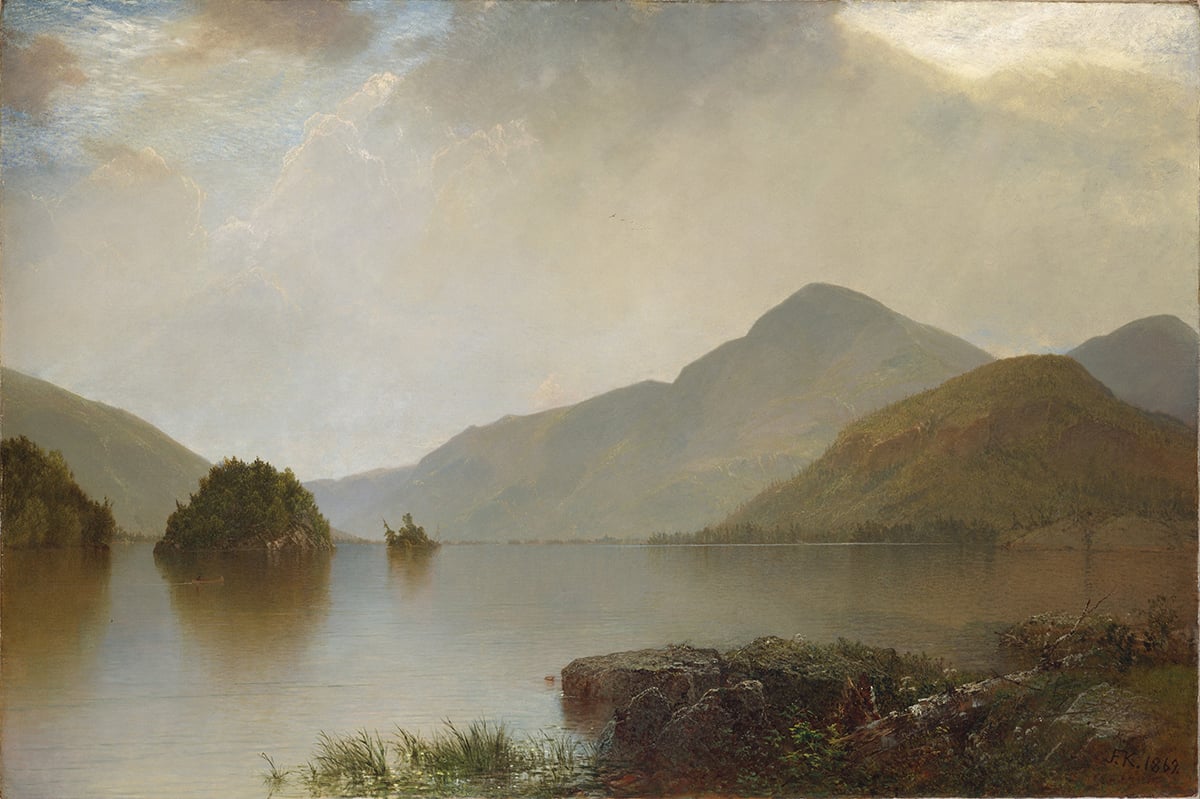
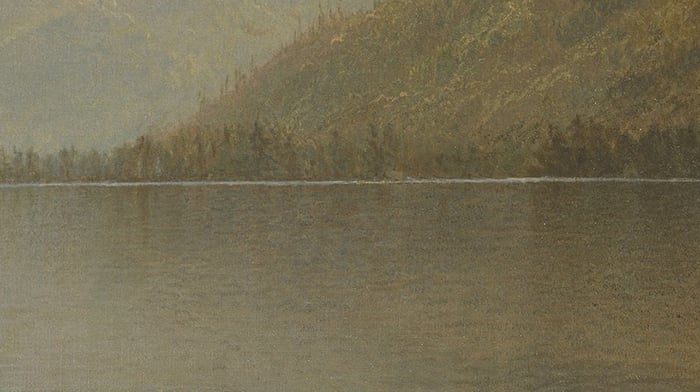
John Frederick Kensett, Lake George
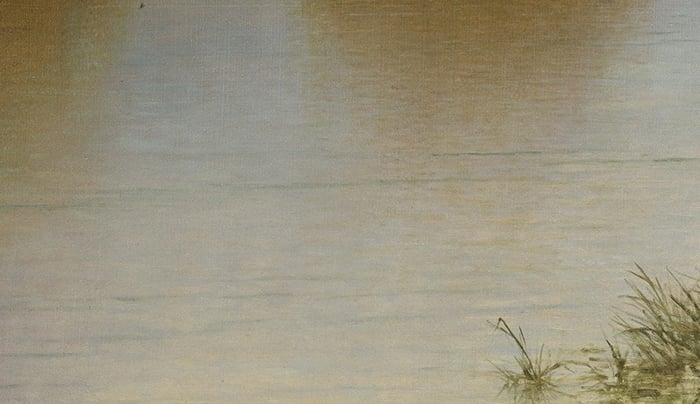
This is a masterclass in color control. Look at all the grays and the weak yellows, greens, and blues. There’s a strong sense of atmospheric perspective, with the mountains being fainter in the distance. Notice the gentle ripples on the water’s surface and the line of light along the distant water. They may be tiny and subtle details, but they carry a lot of weight and realism.
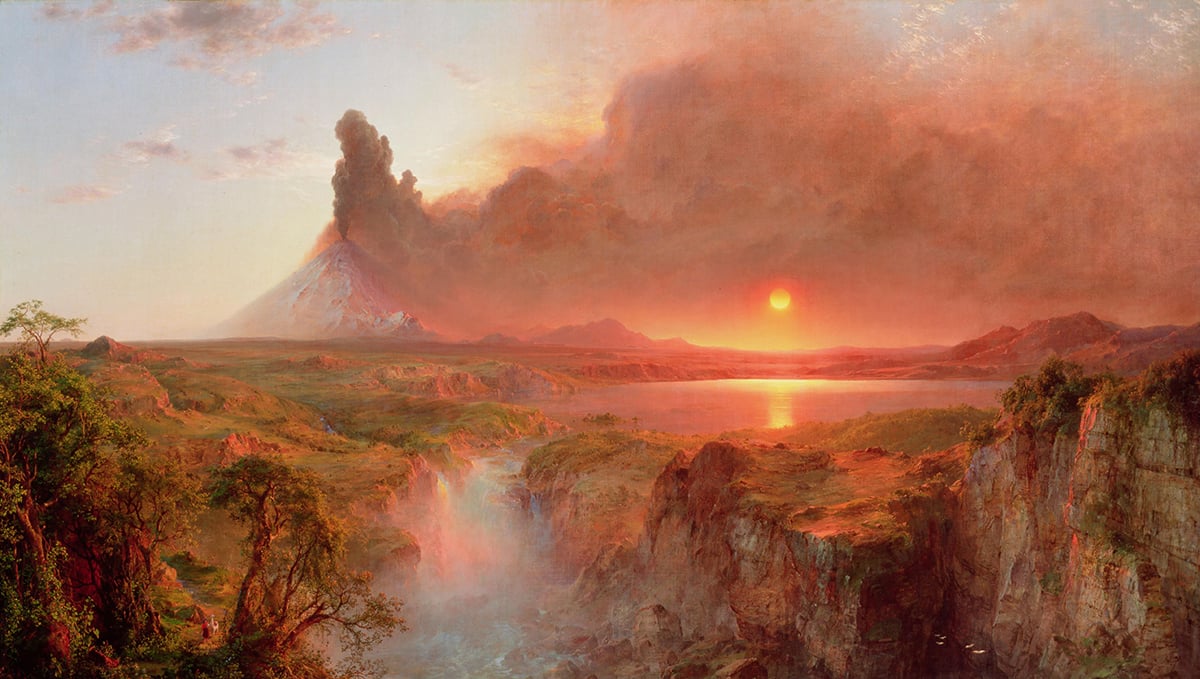
Frederic Edwin Church, Cotopaxi
Let’s finish strong. There’s a lot to take in with this one. A volcano erupts alongside a fiery sunset. Smoke from the volcano provides a moody atmosphere for the sun. The rest of the sky is fairly light and cheery. Church did well with the soft, warm highlights on the land. Though if I were to paint this, I would probably tone down the greens a bit. The color theme is a bit cluttered to me. But I guess being grandiose and cluttered is part of the point of this painting.
If you enjoyed this, make sure to join my Exploring the Masters email series. Each week, I’ll share a new artist for you to explore.
Thanks for reading! Let me know your thoughts in the comments.
Regards

Dan Scott
Draw Paint Academy




Toll, toll, nur leider in englisch
einfach mit Google übersetzen lassen
Simply Awestruck! Fredrick Church!
It reminded me how their art blends realism with romantic idealism: detailed foregrounds, luminous light, vast expansive scale, and often tiny human figures or animals to emphasize nature’s grandeur.
The article is a lovely celebration of Hudson River School: it highlights how the painters combined realism and romanticism to capture expansive, dramatic landscapes with breath-taking detail.
Inspiration and beauty all in one package. Thank you very much.
My favorite of these was Lake George by John Fredrick Kensett. I had heard of the Hudson Valley School but I did not know what it was until this morning, thanks to you. The subtlety of the colors and the atmospheric perspective are handled so well it is inspiring but also humbling. I’ve only come to painting in the last eighteen months after a completely different career in manufacturing. I look forward to your emails every morning. I have yet to do a landscape, concentrating on portraits of family and friends. But this has my juices flowing. Happy Thanksgiving by the way.
Thanks Dan, these are such beautiful paintings that I have never seen before and had never heard of the Hudson River School – the light, the landscapes they captured is epic!
Have you ever heard of an American artist painter by the name Pimister Church who was painting somewhat during the Russell years of similar subjects mainly of the west?
Always enjoy your posts and comments
Holy Mackerel!!!!! Such keeness of vision, organization and stroke….! Some make
me breathless. Thanks so much.
Dear Dan,
Thanks for showing us these amazing paintings. The sheer size throws my head in a loop, not to mention the beauty of realism.
I am not studied in art, so I truly appreciate your “lessons”
Diana
The Hudson River painters are some of my favorites. I have a book that includes most of these and every time I look at them I am inspired. Happy to find other people that appreciate these painters. Thank you for sharing them.
Dear Dan, THANK YOU for send this master pieces that make WOW WOW every time I see a new painting, this is a beauty and a great gift for the mind and the spirit, Thank you again.
Elda Arias.
What a treat!!
Dan, thank you so much for your insight and analysis into the works presented. It is so humbling to view the works of the masters as seen through your eyes.
I got so excited when I opened my email and saw you were featuring Hudson River School painters. I’m working on a copy/reproduction of Kensett’s Summer Day on Conesus Lake (to learn from and then to hang on our wall). There’s something magical in that luminous, calm quality in the sky and water.
Thank you Dan so much. I love these paintings. Thank you for sharing!!
Thank you so much, Dan! Wonderful paintings and wonderfully painted “Little Mule Deer” among them.
Thank you for highlighting the Hudson River School paintings. I live near Frederic Church’s Olana and Thomas Cole’s home along the Hudson. I can assure you the skies sometimes look exactly like their paintings. I enjoy reading what you write, though I am a watercolorist.
Dan, your work spreading your consuming passion for painting is a gift deeply cherished by me, and I express my gratitude for this new document that sheds light on the artists of 150 years ago who were part of the Hudson River School. Hudson River takes me back half a century to recall the beautiful images my eyes captured in the splendid landscape through which its waters flow.
Thank you very much for showing these beautiful paintings, really appreciated. I found everything you shared was so well produced by the artists and can’t get over the detail of the painting. Keep it up Dan great job.
Thanks!
Probably my favorite period for art. I can only imagine their passion and patience they had with their paintings. I know it’s a tall order, but they are my litmus test to declare myself an artist. Till then, I consider myself just a student.
Thanks v much for featuring the Hudson River artists – I love these paintings. Ken Hughes (I think his name is Ken Hughes) did an amazing documentary on the portrayal of the American West in art, and he analysed the work of Bierstadt and Church and Streeton and Moran, and the Luminists also. It’s full of propaganda and symbolism. I used to use it with my classes when I taught the historiography of the American West.
I love how Richard Schmid “Mule Deer” shows the deers natural camouflage. I always find it very hard to imply a thing rather than just showing a thing by fully painting it. I can’t get ‘less is more’ right.
Oh after my heart with these, some of my favorite places to this day and I’m a huge fan of their art and study it all the time. I hope before I’m too old I can even come a little close to this style of tonnalism. I walk Catskills all the time. Back then, they painted what they saw, lived, experienced, no phones! Just sit in nature let it speak, take care of nature for it takes care of you!
Your words have opened a window in me through which I have seen what inspired you to broadcast them, and I assure you that I loved what I saw.
Great art. Thanks Dan for sharing.