
 Share to X
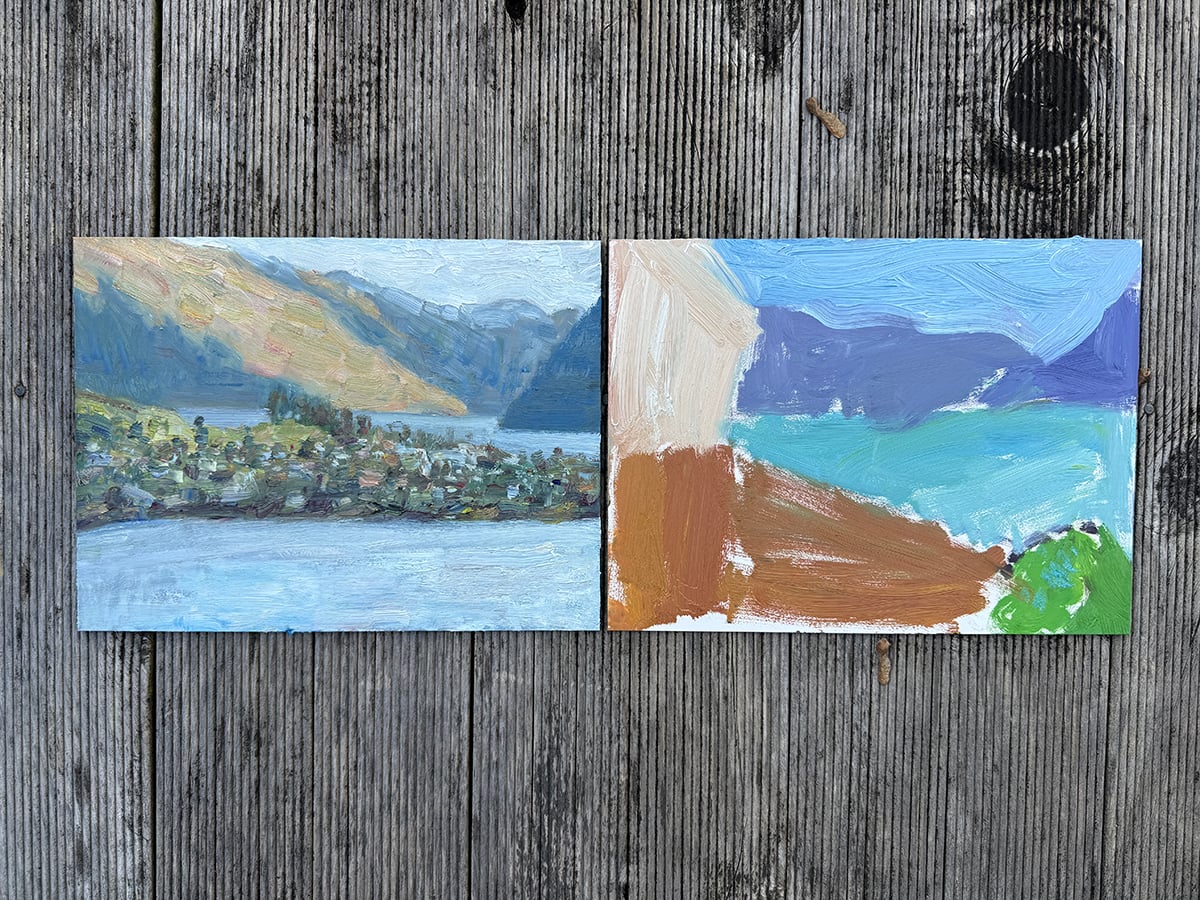
This follows on from my last post: Plein Air Painting With Elora. (Thanks for all the kind words on this post. It means a lot. Chontele and I read some of them out to Elora. She was chuffed.)
As I wrote in that post, Elora and I each created a plein air painting in New Zealand. Mine turned out alright, and Elora’s is precious. But in packing for this trip, I didn’t think about how I would get the paintings home safely. I packed a wet-carry case, but it only fits 5 by 7 inch paintings. Elora’s and my paintings are 9 by 12 inches. I couldn’t wait for them to dry, as they were painted in the last few days of the trip, and the cold weather slowed the drying time of the oil paints. I had to somehow get them home while they were still wet.
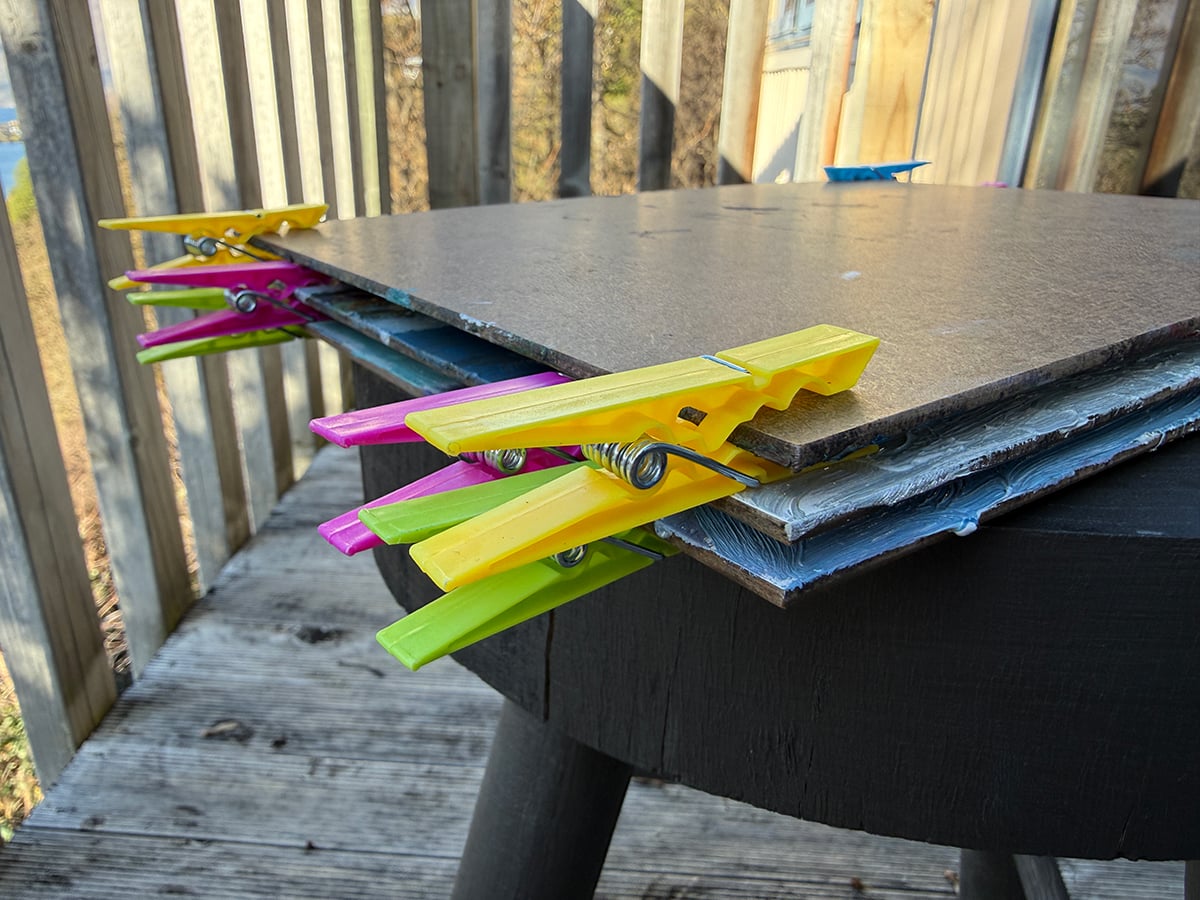
My solution was to brace the paintings against each other with a gap between them so the paint wouldn’t smudge. Chontele went out and got clothesline pegs and rubber bands. I placed these pegs around the edges of each painting. Then I stacked the paintings so they faced each other.
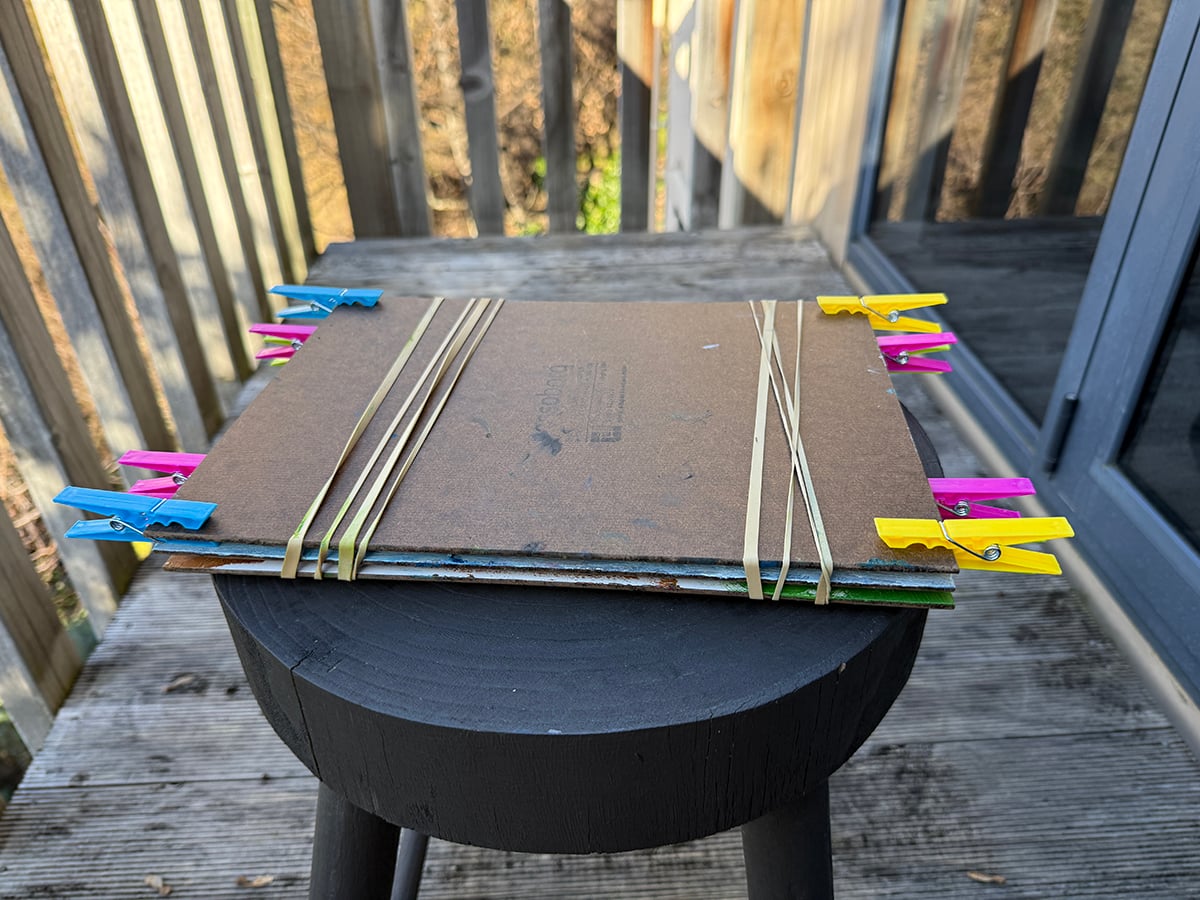
I used the rubber bands to secure them together. (You’ll notice there are three gessobords in the photo. I had a spare and stacked it on top of Elora’s painting, which had particularly thick and luscious strokes.)
Then I placed the paintings in the corner of my suitcase, covered them with an old towel, and prayed. I also made sure the bag was full so it wouldn’t move around in there during transit.
It wasn’t the neatest approach, but it worked! Both paintings arrived safely in Brisbane, Australia.
Part of the art life is being resourceful and making do with what you have. Even back in the studio, I often need to slap together odds and ends to get things the way I like it.
I’m sure there are better solutions so don’t feel you need to copy this. But if you have no other options, it’s worth a try.
Also, tomorrow we will be opening our Color Masterclass for enrollment. We only do this twice or so each year to give students the best experience. More details to come if interested.
Happy painting!

Dan Scott
Draw Paint Academy
—
Most of what I put out is completely free, but if you ever want to dive deeper, check out the following:
21 Easy Ways to Improve Your Paintings: Highly effective and actionable tips you can apply to your very next painting.
Painting Academy: Get up to speed on the fundamentals.
Landscape Painting Masterclass: A deep dive into landscape painting and how to capture nature’s beauty in a painting.

Hi Dan,
I just read your transporting wet paintings, the idea was very resourceful and even better it worked!
I enjoy your emails very much.
Keep them coming.
How inventive! (As someone who re-washes clothes when travelling, I always have clothes pegs, and rubber bands). Well done!
I’ve done something similar, only using push-pins instead of clothespins.
Now THAT’S clever!!! Love the ingenuity of how to deal with wet paint.
Well Done Dan.
bonnie
I recently had the same issue. Your solution is genius! I will always travel with clothes pins and rubber bands, they are much smaller than portable frames for wet paintings!
Thank you for the idea regarding the transport of paintings with wet surfaces. There are likely other methods besides using wine corks, and it would be very helpful if any readers know of or use one—especially when dealing with large canvases.
Why didn’t you just break some matchsticks in half and place those around the perimeter of the paintings & bind round the paintings with cling film, job done and they won’t move
Then also you don’t have any bits that stick out like clothes pegs.
Thanks for the helpful info. Another solution is to use 1” slices of a wine cork and then cut each slice in half to make a half-moon shape. Put them in the corners and face wet sides together. Tie with string or warp with plastic wrap.
That’s what I do and it works well. I tapped them together and secured them in a garbage bag before putting in the suitcase.
What a great idea!! I love your posts…
Informative, creative and CLEVER.
Dan, I keep a baggie of wine corks cut into 1/3 inch rings and then into half. I cut them with a steak knife. I then place them on edges of wet painting every 6 inches or so, place the same size panel painting wet side down on top and tape it all together with blue tape. Wet paintings travel safely this way. The small cork half-moons do their job. Then just touch up any edge smudges at home. The edges are mostly under a frame eventually anyway.
I transport paintings by slicing old corks from wine bottles. I then cut these in half, so that the flat side can lie along the outer edge of a painting. I secure them in place with masking tape, and wrap the whole lot in clingfilm. Into the suitcase they go. Paintings are face to face, and sometimes need an extra free canvas as you did. I carry the corks in a small bag with my plein air stuff. They are light and don’t take up much room.
Excellent idea, Dan! Thank you! A great reminder to think outside the box when you need an on the spot solution to a problem.
Thank you so much for this. Creative thinking going on here. Brilliant idea.