 Share to X
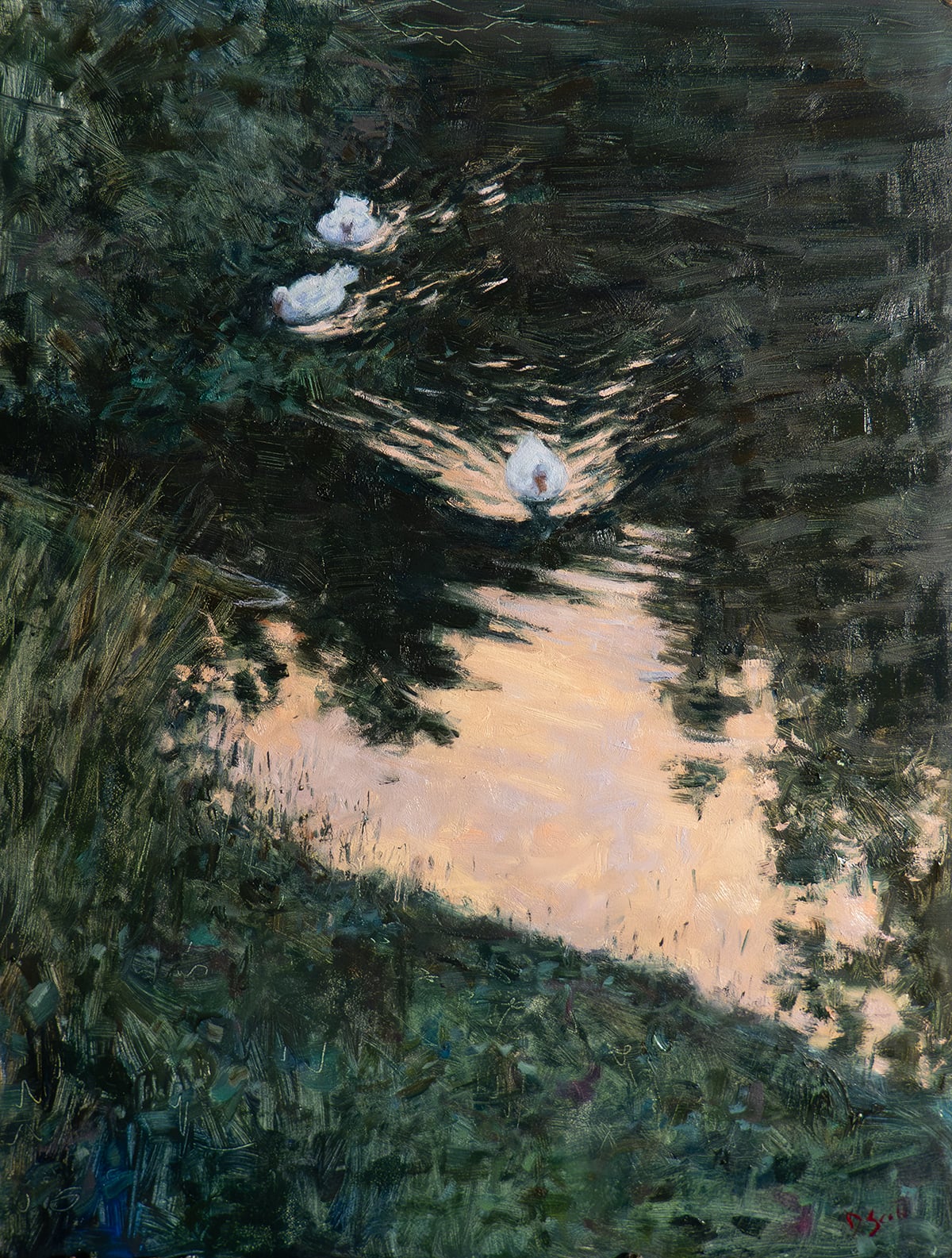
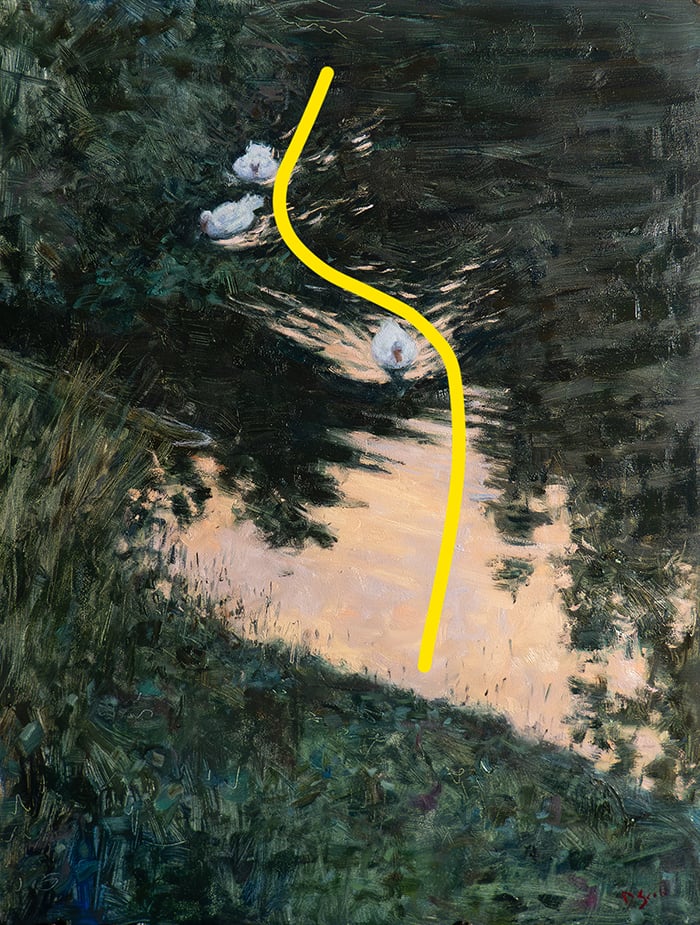
A key feature of my Three Ducks and Twilight Reflections painting is the use of pattern. Notice the clear abstract design of light and dark shapes. The painting can essentially be boiled down to a dark green-ish mass with a few crisp, light shapes jumping between in a rough S-shape formation.
I find the concept of pattern to be one of those things we are so commonly exposed to in day-to-day life that it can be hard to communicate what is going on. Patterns are all around us and we are subconsciously aware of them, but we may struggle to identify what they are. It’s also true with painting. It’s fairly easy to spot paintings with strong use of pattern. But explaining the patterns is much more complicated.
Whenever I encounter a topic that I struggle to get my head around, I turn to Richard Schmid. Sure enough, he wrote some wise words on the topic of pattern in Alla Prima II.
He wrote on page 264:
“PATTERN is one of the most important design structure essentials to know about. Typically, it is a large conspicuous shape (or more often a grouping of shapes) within a picture area to form an abstract value design. This can be created by connecting either the light or dark values in a subject together en masse against a contrasting background. For example, the shape of a model’s white dress may connect with the light-colored shapes of a background to form a single larger shape. Often two or three connected value shapes can be beautifully entwined to form a sort of visual fugue on a canvas in the same way multiple melody lines dance together in music. More basic patterns serve nicely as a sort of master plan when a subject already has broad simple values joined, or when you wish to set up a subject in such a way as to have such a pattern to paint.”
Schmid later wrote:
“Pattern gives a painter a plan, a grand design to follow. Often, as here, nature provides a ready-made pattern. Other times we must search for vantage points or manipulate our subjects (as in setting up a model or still life) to achieve a pattern.”
So, in my Three Ducks painting, the ducks and the reflections on the water melt together to form basic light shapes. And all the dark areas melt together to form a basic dark shape. Together, they form a simple pattern. It is this pattern that first struck me when I saw this in life and it’s the reason I painted this subject. The ducks alone are not the focal point. They just happen to play an important role in the pattern.
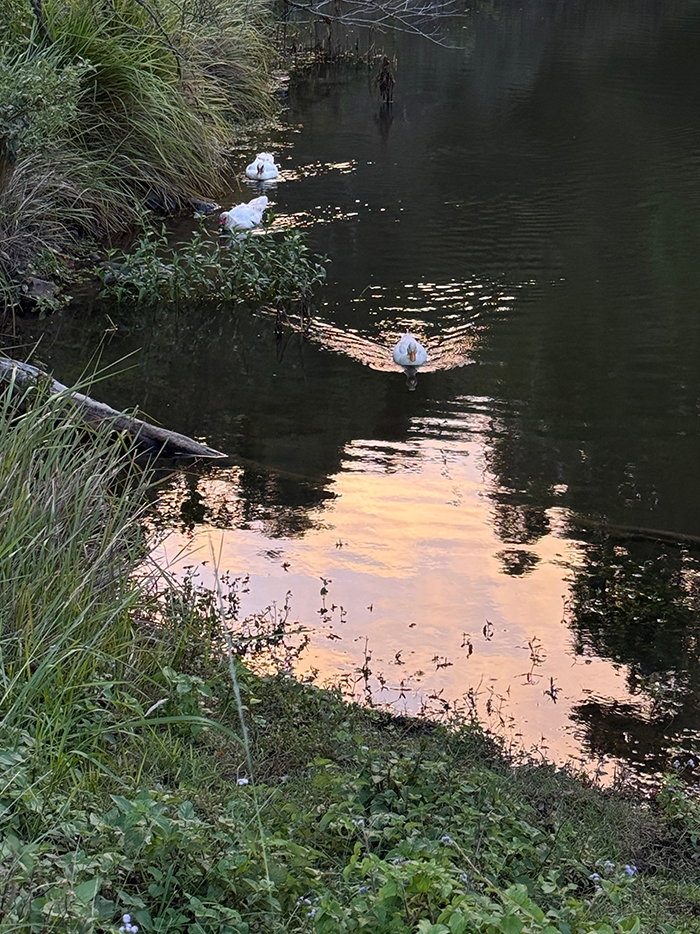
As I painted, I leaned into the pattern somewhat by simplifying the dark shapes and compressing the values. I wanted the dark areas to read as a single mass rather than distinct areas of water and land. In the reference photo, you can see that the dark areas are much more defined and, as a result, the pattern is a bit less recognizable.
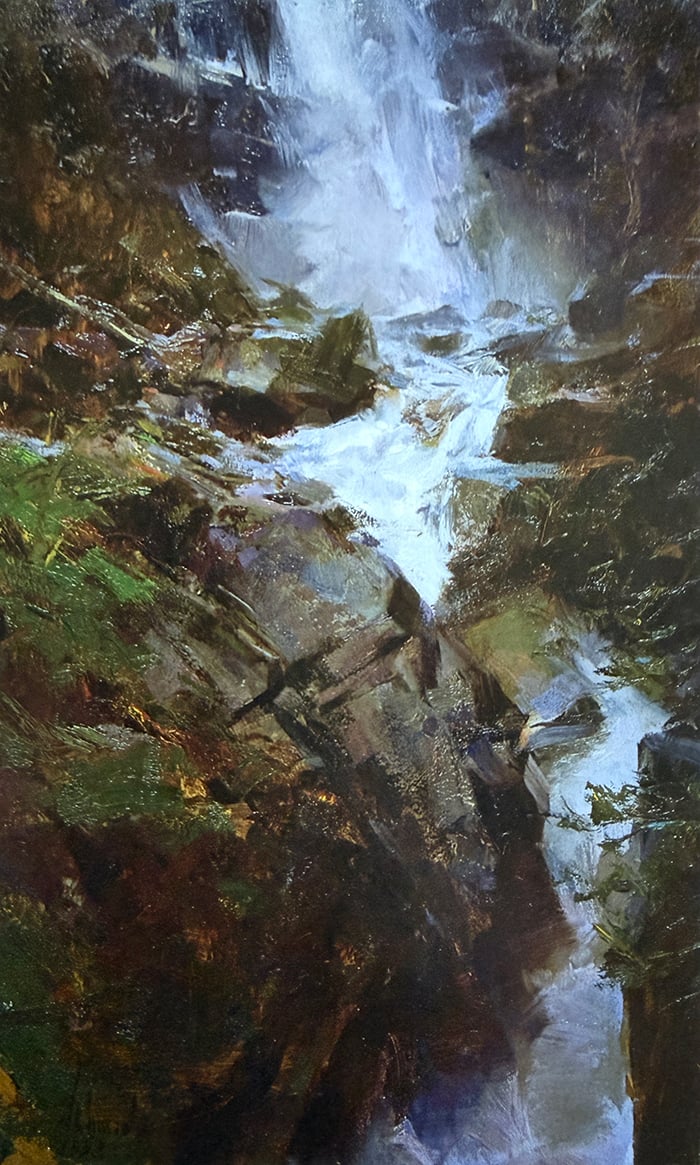
Here are a few other good examples of pattern, starting with Richard Schmid’s Glacier Waterfall. This was the example he featured in his book. He describes the pattern as “a single light value traversing two dark shapes.”
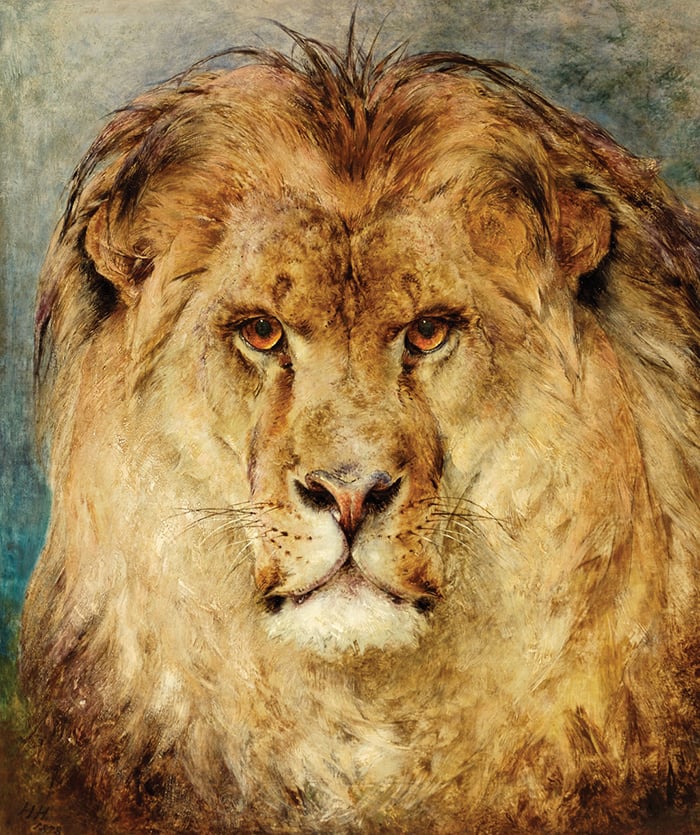
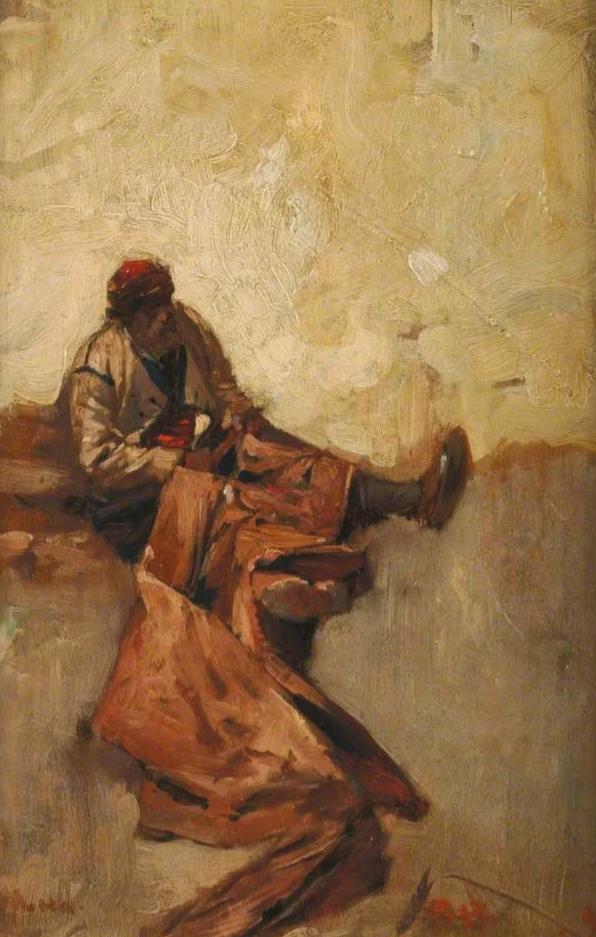
Schmid also recommended the work of Sir Frank William Brangwyn. Many of his paintings, like the one below, feature strong patterns of light and dark. Notice the three distinct value shapes and how the figure and drapery zig-zag down.
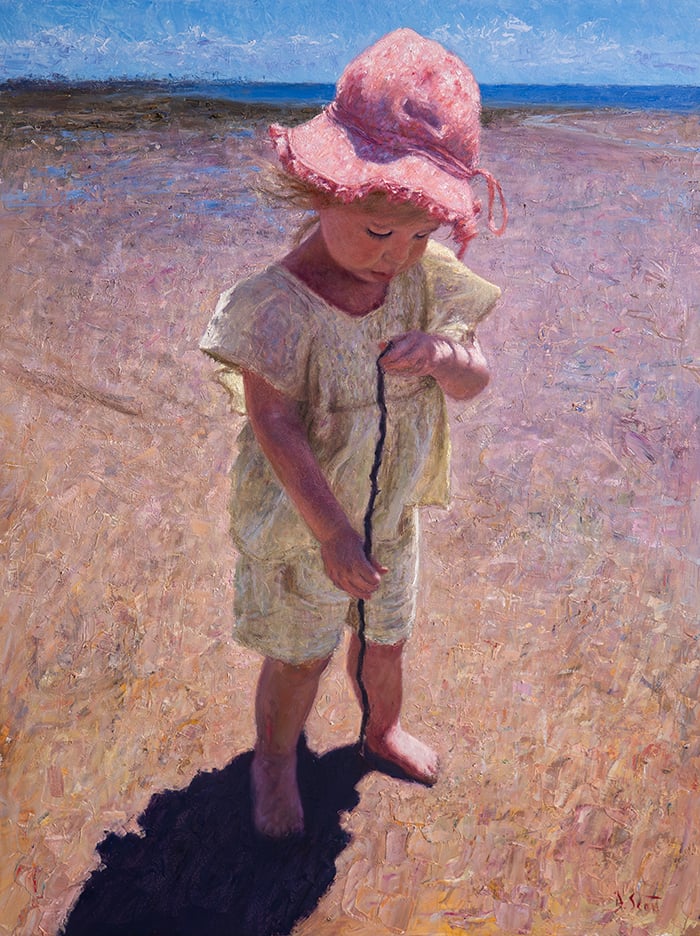
In Elora at the Beach, the painting can be simplified down to a few strong light and dark shapes. This pattern is the core structure of the painting. Then as you look closely, you start to notice all the intricate details of Elora in shadow.
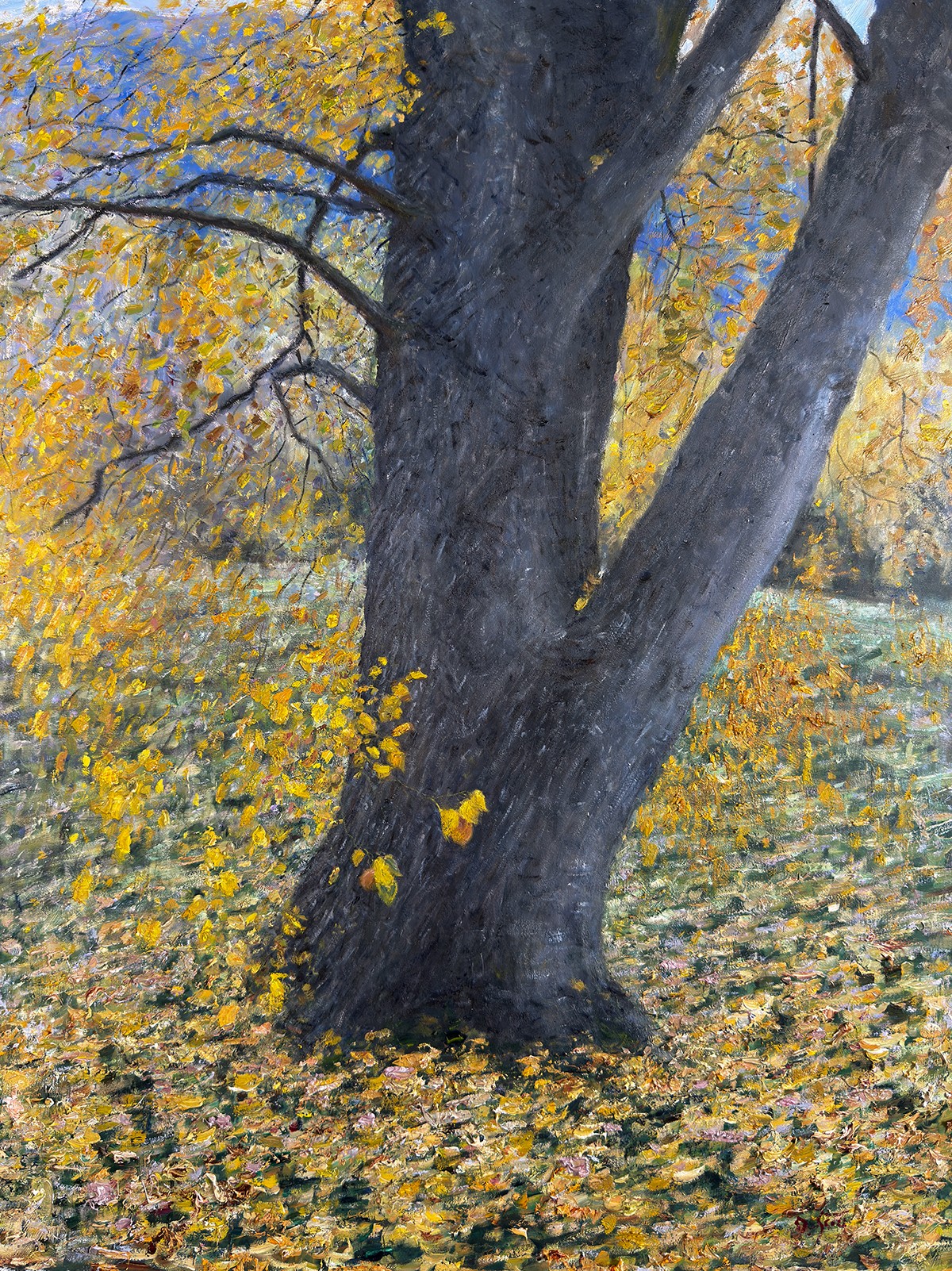
In my New Zealand, Autumn Colors painting, the pattern is a strong, dark shape in the tree trunk and branches against the light and colorful surroundings. The ground, the distant trees, and the yellow leaves are similar in value and melt together as a single mass. The smaller branches and twigs also form an interesting pattern as they weave through and connect the leaves.
In my sunset painting below, there are three distinct shapes at play: the near-black foreground, the dark purple clouds, and the light open sky. Notice how the dark clouds somewhat link together to form a single dark shape. The light open sky area is full of dancing colors, but they are all similar in value and read as similar light shapes.

You can improve your understanding of pattern by simply being on the lookout for them in day-to-day life. See if you can spot simple patterns in complex or even mundane scenes. Once it clicks, you’ll start to see interesting patterns and subjects to paint everywhere.
Thanks for reading. If you want to learn more, you may be interested in our 30-Day Creativity Kickstart. Enrollment closes in 5 days.
Happy painting!

Dan Scott
Draw Paint Academy