
 Share to X
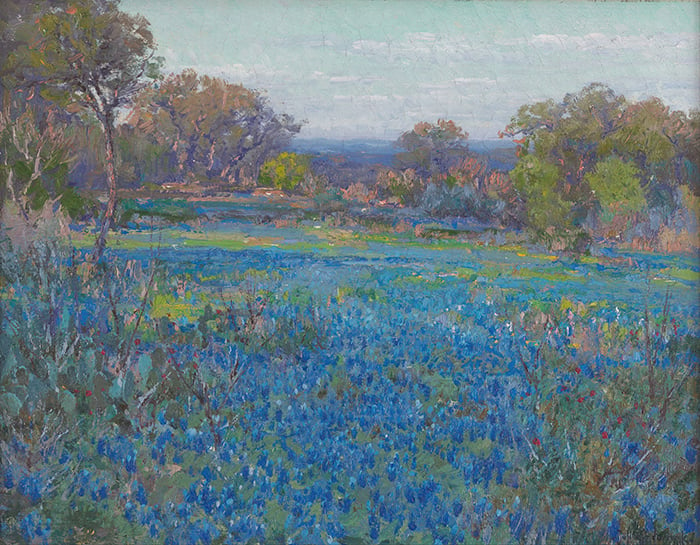
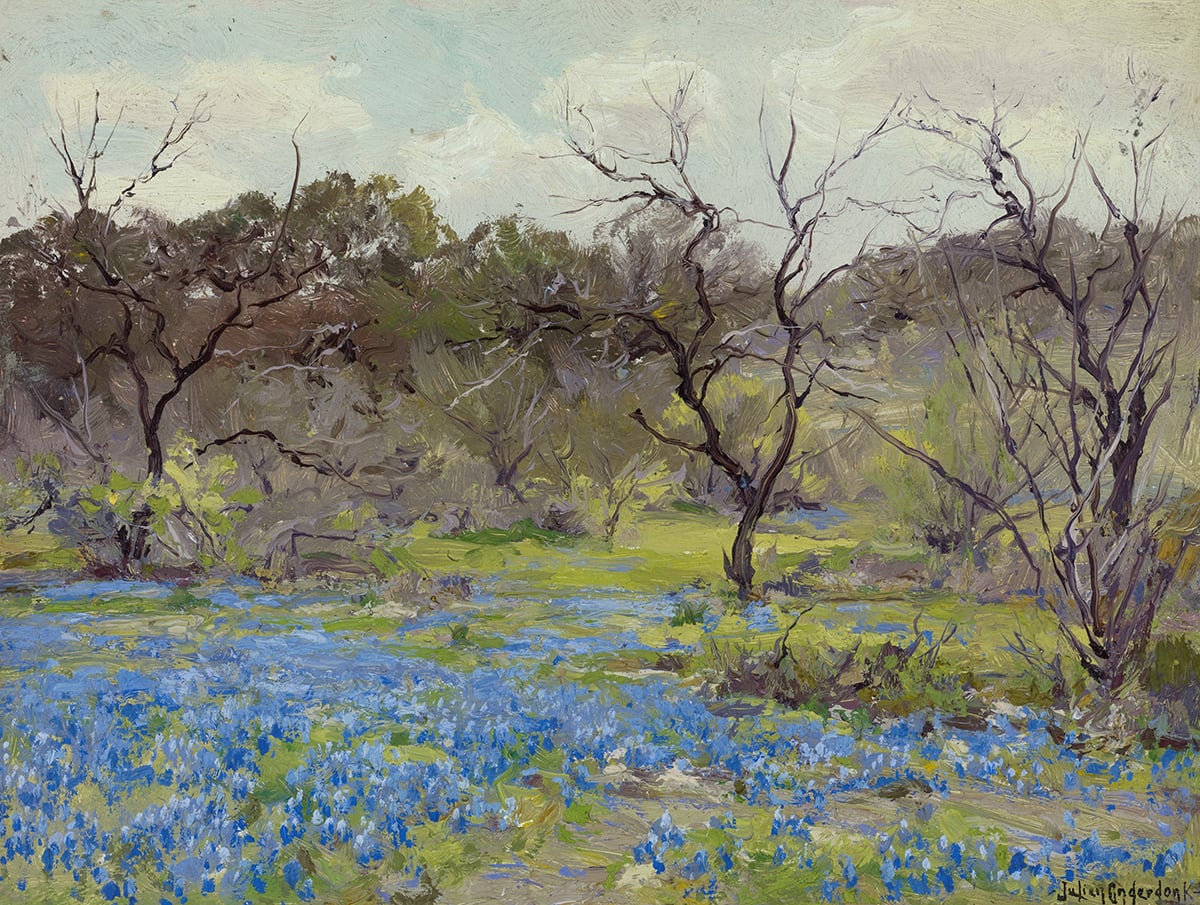
After writing the ground post, I was reminded of Julian Onderdonk’s work. He was a master of painting the ground, often studded with bluebonnets, cactus, and other wildflowers. His work is iconic of the Texan landscape (with bluebonnets being the official state flower of Texas).
I went down a bit of a rabbit hole reading about his life and work. I have enjoyed his work for many years, but I didn’t know much about him as a person or as an artist. Turns out, he was much more than just a “bluebonnet painter”. Here’s what I learned, followed by a showcase of his paintings.
He was born in San Antonio in 1882. His father, Robert Onderdonk, was an accomplished artist and was often called “The Dean of Texas Painters.” He was Julian’s first teacher. What a tremendous benefit it is to be raised by an artist. Not just because of the obvious teaching benefits. But also because you don’t need to jump over the common hurdle of justifying why you want to become an artist in the first place.
He later studied under Kenyon Cox and Frank Vincent DuMond at the Art Students League in New York. And then with William Merritt Chase at his Shinnecock Hills Summer School of Art. Chase pushed Onderdonk towards landscape painting rather than portraiture, which proved to be the right move. Interestingly, Chase also taught his father a few years prior.
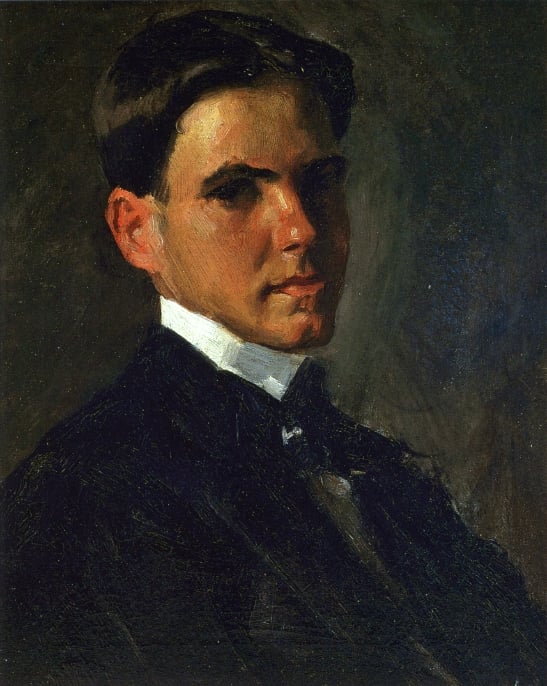
(Sidenote: A common theme with many of the great artists I write about is… they often had great, sometimes famous teachers. So, spend time finding great teachers, and when you find one, hold onto them and learn whatever you can from them!)
Onderdonk’s early years were hard. He lived the typical starving-artist life, with piling bills and a growing family to support (a young wife and two children). To make ends meet, he churned out paintings under pseudonyms and sold them to New York department stores. They were mostly marine and landscape paintings signed under names such as “Roberto Vasquez,” “Chas. Turner,” “Chase Turner,” or “Elbert H. Turner.” James Baker wrote a book about these early years, Julian Onderdonk in New York: The Lost Years, the Lost Paintings. It’s on my reading list and I’ll let you know what it’s like.
There’s a good takeaway here. With many of history’s great artists, we tend to get a rose-colored view of their lives and work. But the road to their success was often paved with much hardship and struggle. And many of them set aside their artistic integrity to make ends meet in the early years. I’m sure Onderdonk didn’t want to churn out painting after painting to sell to department stores under pseudonyms. But it allowed him to continue painting and progressing as an artist. Sometimes that trade-off is required. The art journey isn’t always glamorous, but perhaps that’s what makes it exciting.
Onderdonk’s iconic bluebonnet paintings came relatively late in his career. He started painting them around 1911 after moving back to San Antonio in 1909. The first was Spring Morning (below). What a beautiful painting, with the bluebonnet and cactus-studded ground against the glowing background.
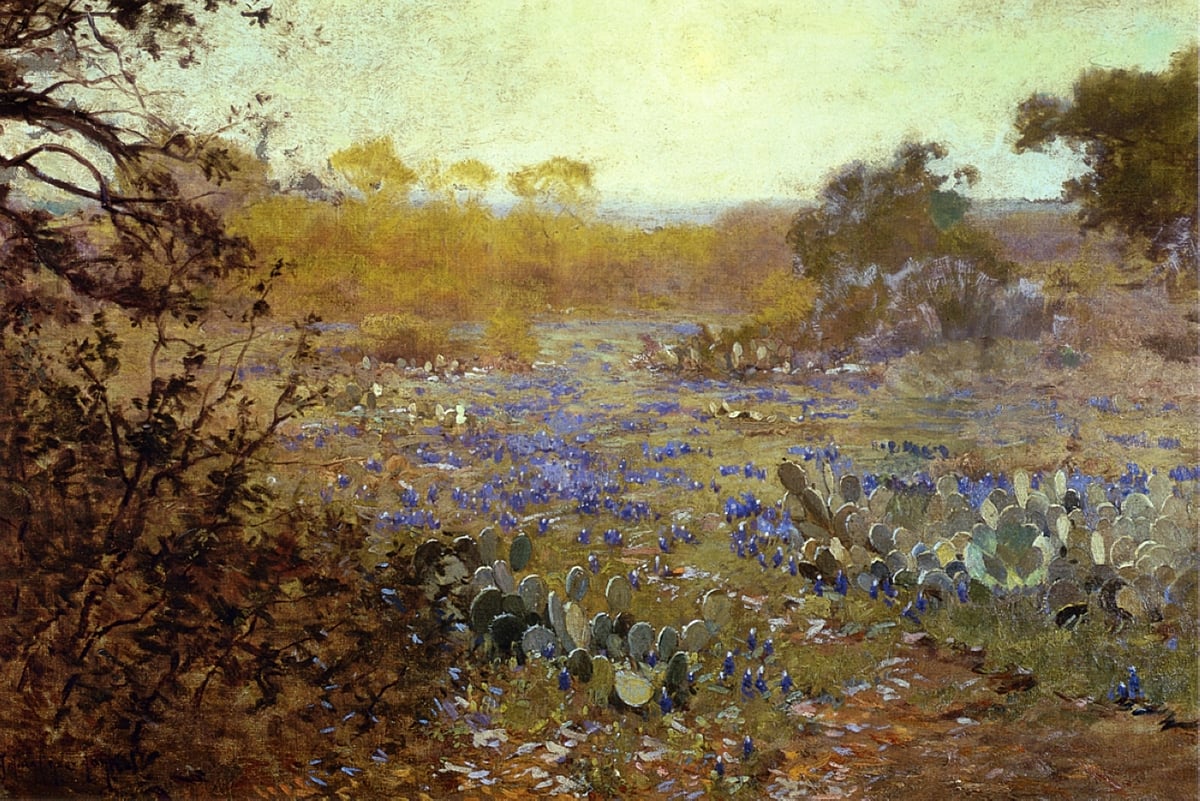
Jeffrey Morseburg provides some interesting commentary on bluebonnets and their significance to Onderdonk’s work in his artist biography. He wrote:
“Each spring, a number of varieties of blue lupin blanket the hillsides of the Texas countryside, sometimes by themselves and, on other occasions, mixed in with other wildflowers. In the bluebonnet, the artist found a subject he truly enjoyed painting and we must remember that in those early days of Texas art, before color printing was in widespread use, bluebonnet paintings were not yet the commercial staple they would become.”
Onderdonk wrote of bluebonnets:
“I like the bluebonnet because a field of this Texas flower seems just to have burst from the ground and it trembles subtly, making it beautiful.”
They turned out to be a commercial success. And for better or worse, Onderdonk’s name became closely tied to his bluebonnet paintings. In his later years, he did resist being pigeonholed as the “bluebonnet painter.” With his success came many imitators and a sense of cliché to the subject. As folklorist J. Frank Dobie put it: “Seizing upon the flower’s popularity, every dauber in the country tries his hand at painting it, and bluebonnet chromes are as plentiful as cowboy figures on pulp magazine covers. Yet no amount of commercialism, no fad running into insipidity, no betrayal in the name of art, can detract from the essential loveliness of the flower springing on the hills and in the valley of Texas, yielding a passion of blossom, a splendor of spread.”
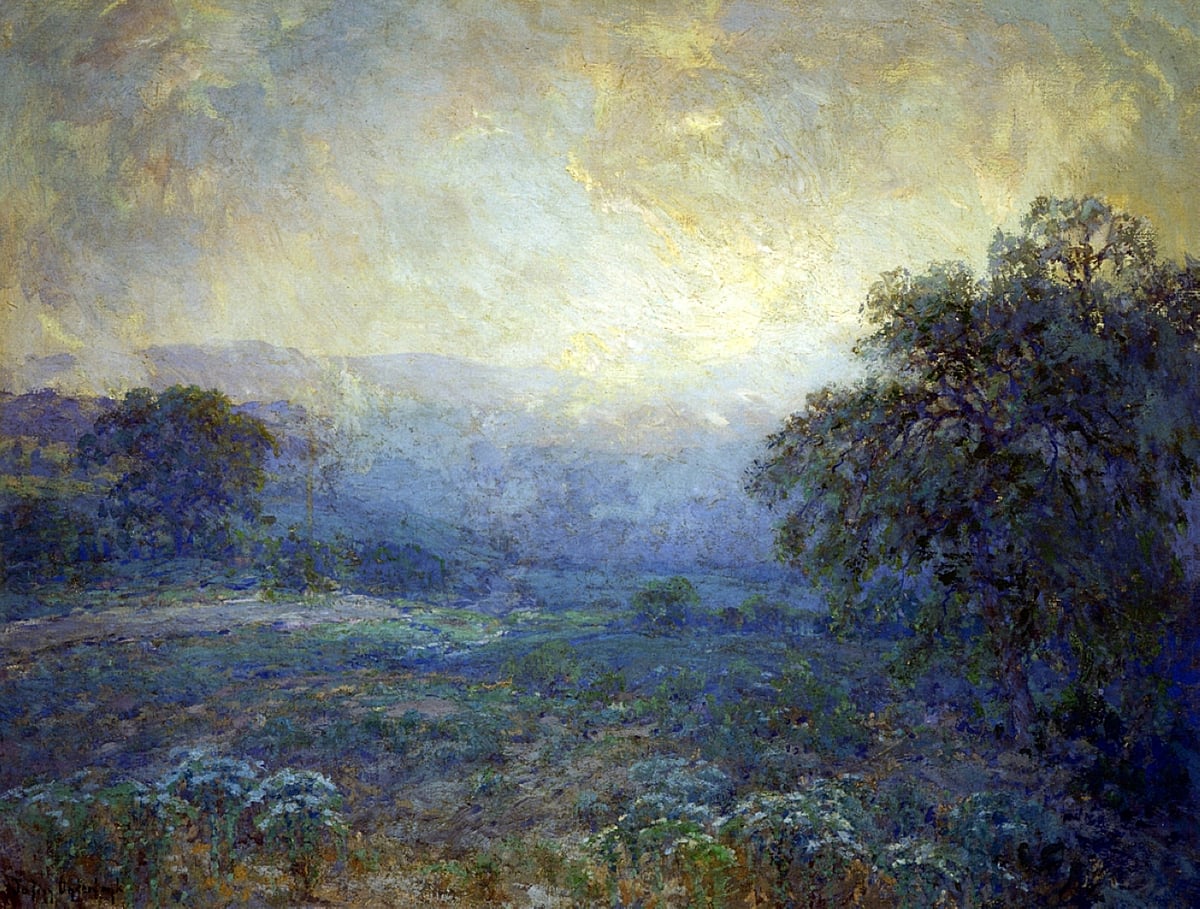
He died young and suddenly in 1922 at 40, after a brief illness and appendicitis issues. He was at the peak of his success. Below was the last bluebonnet painting that he was working on. He didn’t get a chance to complete it, though he must have been close.
His studio was moved to the grounds of the Witte Museum in San Antonio and is on permanent display. The Dallas Museum of Art also dedicates several rooms to showcasing his work.
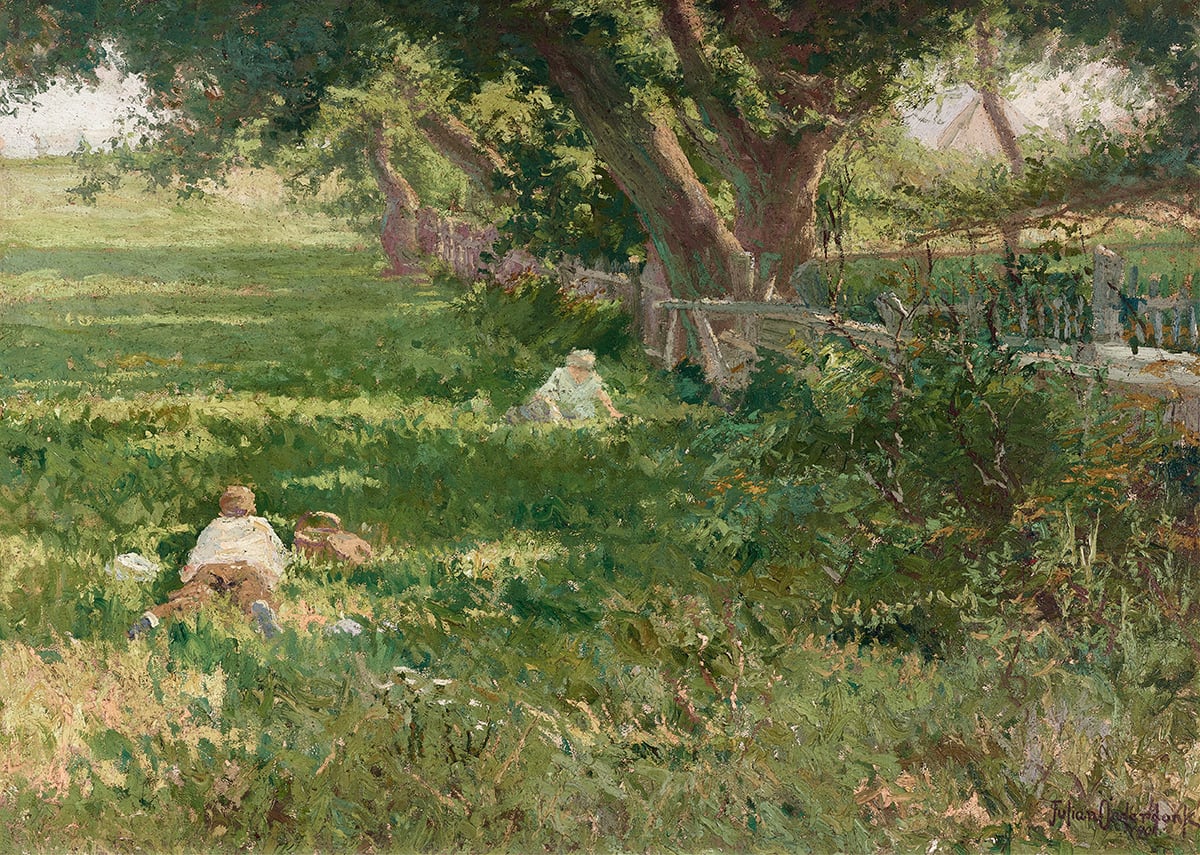
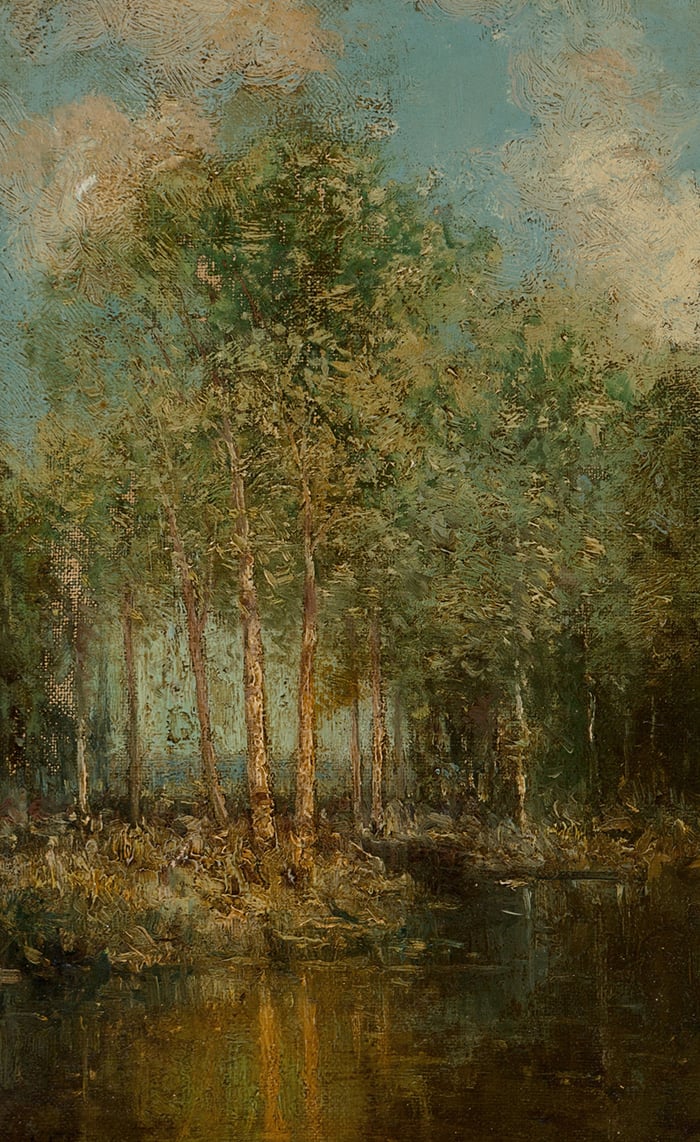
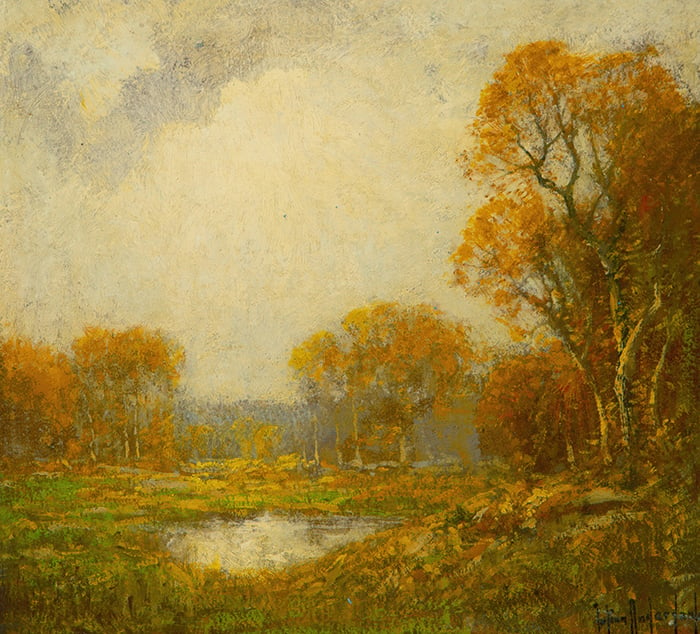
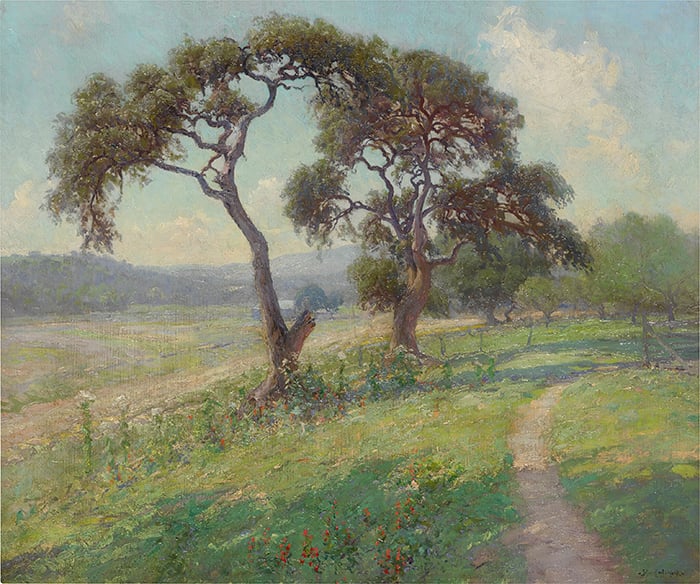
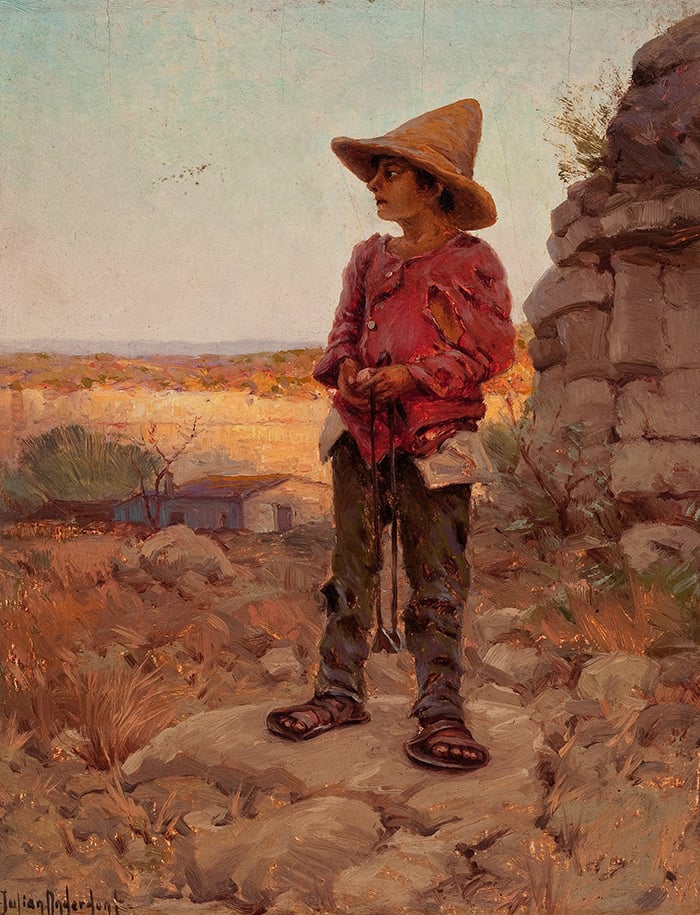
The following are a few other paintings by Onderdonk. Not just of bluebonnets, but also of other landscapes and even a portrait.
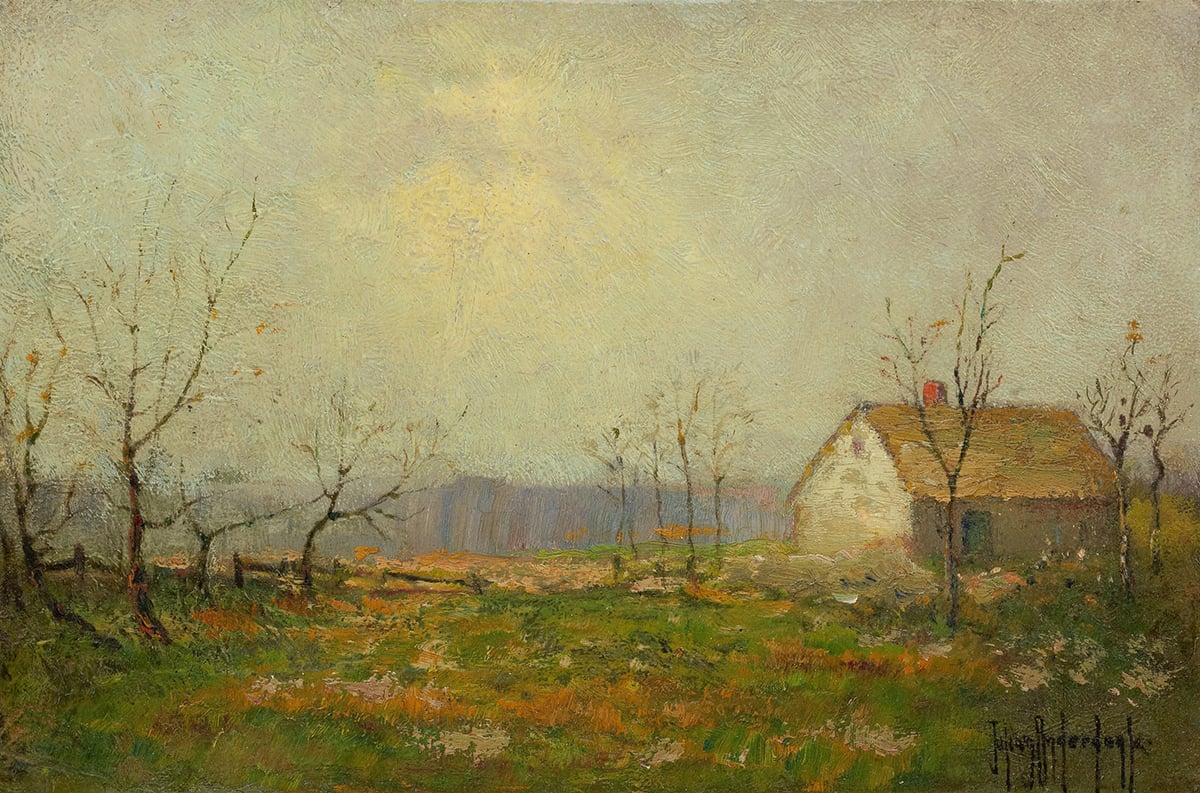
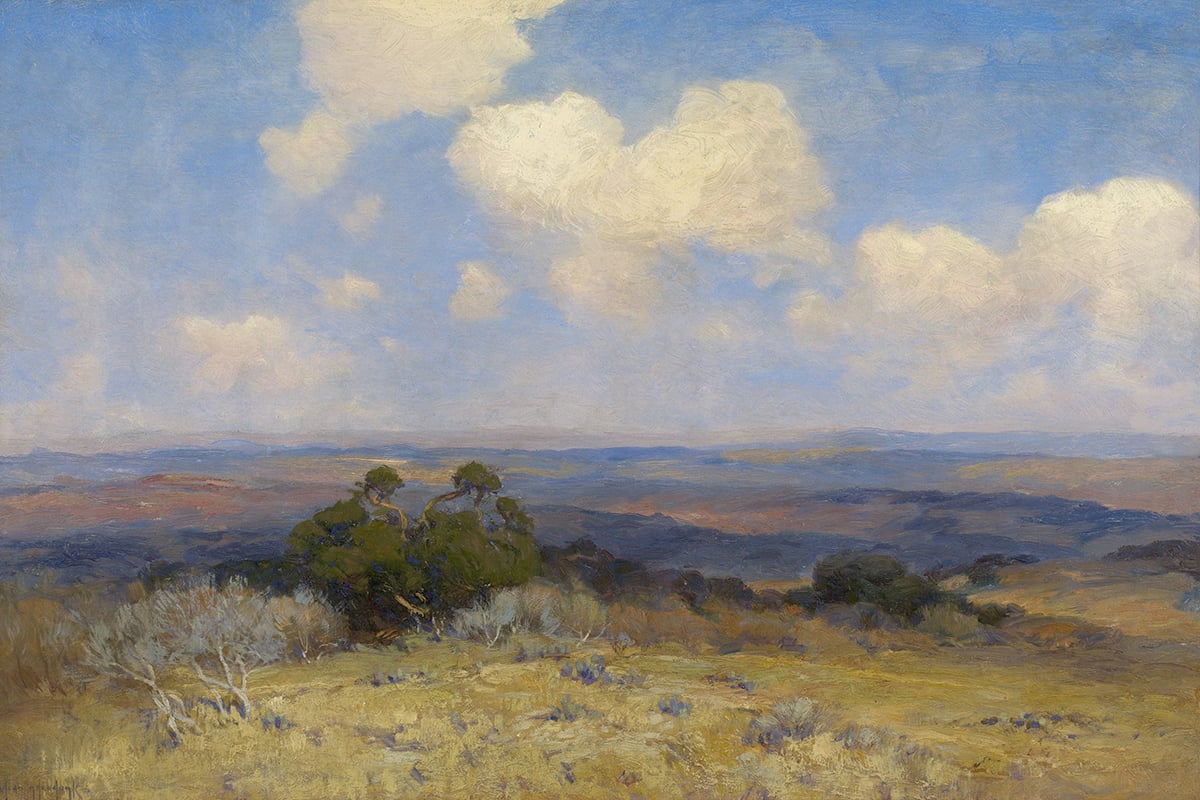
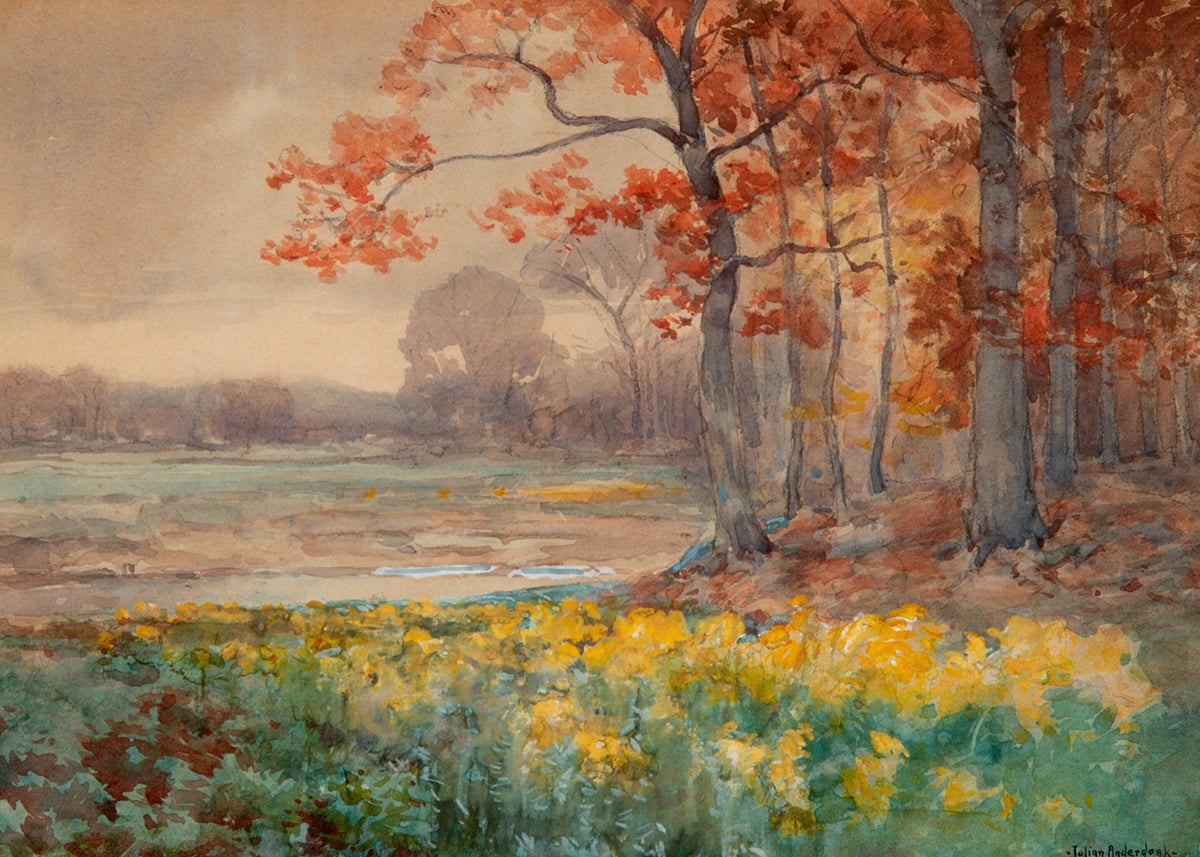
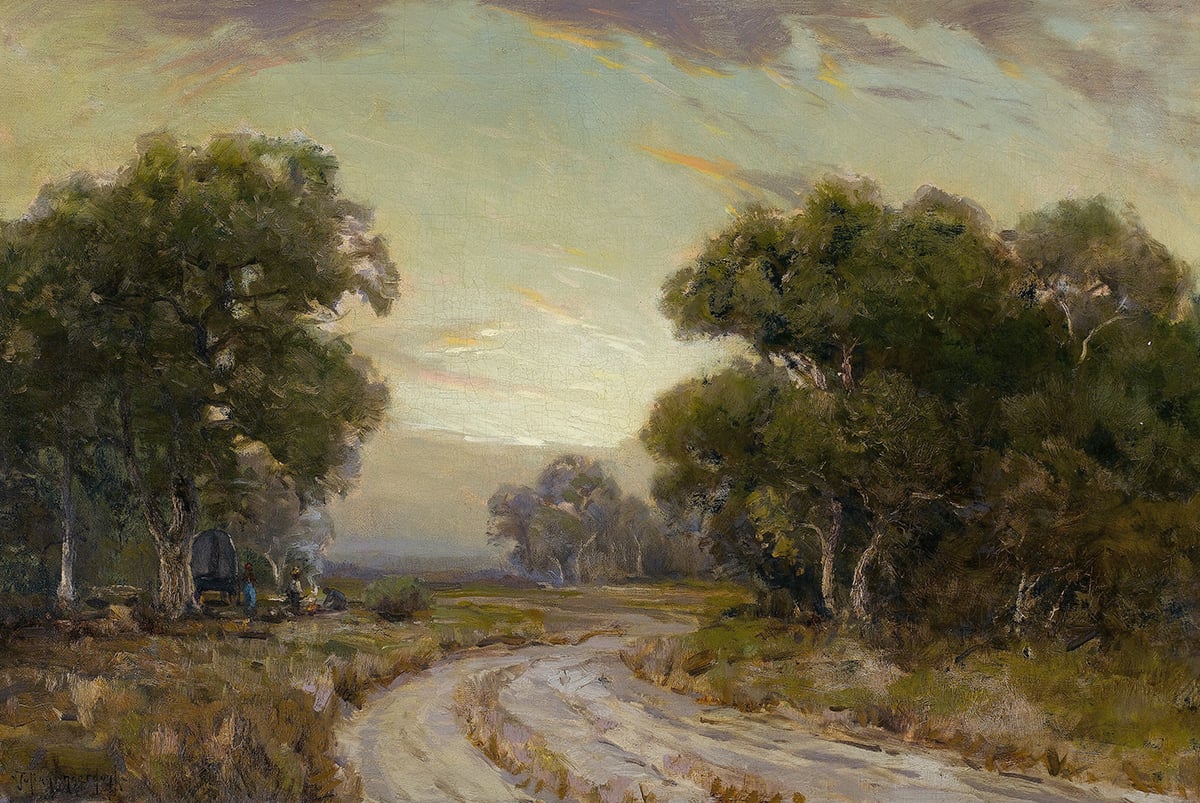
Thanks for reading! Let me know your thoughts in the comments. If you ever want to learn more, start with our fundamentals course.
Happy painting!

Dan Scott
Draw Paint Academy


Living in this Texas Hill Country, he truly captured the essence! The harshness of the mesquites and beauty of the bluebonnets is magical just once a year…
Hi Dan, I love your articles. They are interesting , diverse and sensitive to the integrity of the subject. Thank you for your generosity in writing them.
Arlene
Always I teresting to read about and see paintings previously unknown!
Loaded with lots of information and research…interesting…thanks for the sharing…you work really hard to convey all of the aspects of art to your public…really appreciated…hope the family is well…thanks once again.
Thank you so much for introducing us to so many artists I didn’t even know existed. This one in particular was an amazing discovery, and I immediately wanted to learn more about him. I wish I could go and see Onderdonk’s art, but I’m not going to Texas.
Thank you so much for taking the time to research, write and compile this beautiful article, Dan. My wife and I came across a couple of Julian Onderdonk’s paintings (in postcard form) in Tijuana, Mexico, this week. I am currently receiving treatment for cancer here. We live in South Australia. The beauty of Onderdonk’s Art – and the wonderful article you have so generously shared here – will return with me Down Under next week!
With Grateful Thanks for your work,
Philip Galley
Very interesting article. Love the paintings and history behind the artist and artwork
Thank you Dan, for the view of this artist’s work. Seeing the differing styles of your work and the work of other artists is helping me in my struggle to find my own style. Out of necessity, I am limited to working off reference photos, and it’s a real temptation to get caught up in duplicating the photo. I suspect the wider view one has in plein aire painting somewhat eliminates this temptation. For my purposes, seeing the looseness of other works helps to remind me of what I personally am ultimately aiming for, an artistic representation rather than a detailed reproduction.
very nice and I hadnt heard of him before.
Thank you so much for sharing Julian Onderdonk with your viewers. He is a Texas treasure. The Bryan Museum in Galveston has several of his and his father’s paintings.
great artist and beautiful landscape paintings , so inspiring
I had never heard of Julian Onderdon and his beautiful landscapes. Thanks so much for that excellent overview !
I thoroughly enjoy your emails. Love learning about the Artists that you enjoy and like. Thank you so much for permitting people like me to learn lessons from you.
This was a great piece which has brought to light about another accomplished artist.
Recently I became acquainted with T.C Steele who was from the same era. He painted portraits and landscapes in Indiana. He too was a very accomplished painter.
Thanks for providing this insight into an artist I didn’t know about even though I live in Texas. I always look forward to spring and bluebonnet season here. I am duly inspired to continue to work on my bluebonnets for sure and go into Dallas to see his work in person!
Thank you for sharing this! Beautiful work from a man I never heard of. So now I can share with my art students. I appreciate all you do to help educate and inspire me, as well as your followers.
Have a great day!
Hi Dan, thank you for sharing, I remember Julian Onderdonk whilst studying one of your excellent, earlier courses. You are also a great teacher, much appreciated by me. Thanks for this extra info, it’s a welcome bonus! Sandra
I thoroughly enjoyed reading this article. And was overwhelmed with emotion at “though he must have been close.”…Thank you for bringing to light so many artist that are not common knowledge but deserve to be. Beautiful paintings and what a beautiful story 🤍
beautiful use of color and such emotional paintings-love of nature!! I live in west Texas, and the landscape is hardly “beautiful” in any traditional sense!!!!
I have enjoyed the paintings of Julian Onderdonk.Thank you !!!
Wow. Love this presentation of work. Onderdonk’s work is beautiful and displays nature from Gods perspective. Thanks for this!!
Wow! Thanks!
Now I know how to paint cacti (called “sabras” in Israel) from the bottom up.
iI especially like “Springtime” and the one with the colorful eucalypti.
The deciduous trees are also interesting.
Kudos.
Carol Pinski
These works of art are amazing! Thank you! Theres a magic in each of them that takes my breath away!
Wow! What stunning paintings. I wish 😊. I do ok, but don’t even come close to that kind of detail. I keep at it😂
Thank you Dan, I LOVE this guy’s paintings. Beautiful use of LIGHT!!!
Keep up your great work of sharing master pieces some of us haven’t been exposed to. I have so much to learn and so little time left….sigh. But the FUN and JOY is trying.
bonnie
I appreciate your emails and have learned a lot. Thank you
Thank you for introducing me Julian Onderdonk what a wonderful landscape painter.
What a delightful article. May I share this with my local art guild?
Interesting style! Very in vogue palette for that time period. Excellent landscape artist. Reminds me of the Hudson River style of painting. Thanks for sharing!
Thanks Dan!
I too, was intrigued by the native Blue Bonnets and Indian Paintbrush!
I couldn’t help but try to paint them and then when we went to Texas I saw them both and had a chance to study them in situ! We saw them growing wild in hill country-Fredericksburg! Beautiful!
Thank you for sharing about Julian Onderdonk. I enjoyed learning about his journey and studying his wonderful artwork. I especially appreciated the reminder that great art doesn’t just “happen”.
Sally Lee
Thanks for a great tour of an artist life and paintings. I share your enthusiasim for his work.
Connie Cole in Fostoria , Ohio, USA
Thank you Dan for taking the time to do this it’s a fabulous overview. I haven’t come across this artist before… beautiful works.